Manufacturing Floor to Office: How CMMS Supports Cross-Functional Teams
 By Steven Quayle

No team in manufacturing works in isolation. What happens on the production floor directly impacts planning, procurement, quality, finance, safety, and customer delivery. At the same time, office teams depend on accurate, real-time maintenance information to make decisions that keep operations running smoothly and profitably.
Yet many manufacturers still operate with disconnected workflows. Operators log issues on paper or via informal messages. Maintenance keeps fragmented notes. Finance relies on spreadsheets. Procurement waits on emails. Management receives reports that are outdated as soon as they’re created.
A modern CMMS changes this reality. It becomes the central nervous system of the organization, connecting people, processes, and data across departments. Instead of isolated efforts, teams collaborate around a shared source of truth.
Why Cross-Functional Collaboration Matters in Manufacturing
Manufacturing depends on tight coordination between production schedules, equipment health, safety compliance, budgeting, and inventory management. When teams operate in silos, small issues escalate into costly emergencies.
The consequences are familiar:
Production loses time waiting for maintenance updates
Procurement orders incorrect or unnecessary parts
Finance struggles with unpredictable costs
Quality teams miss early defect signals
Safety documentation falls through the cracks
Leaders make decisions based on stale information.
When teams share data and communicate clearly, the opposite happens. Uptime improves, costs stabilize, and decisions become proactive instead of reactive. A CMMS provides the foundation that makes this coordination possible.
Supporting the Production Floor

The production floor is where asset performance directly affects output. Operators need an easy way to report issues, request maintenance, and understand what work is planned.
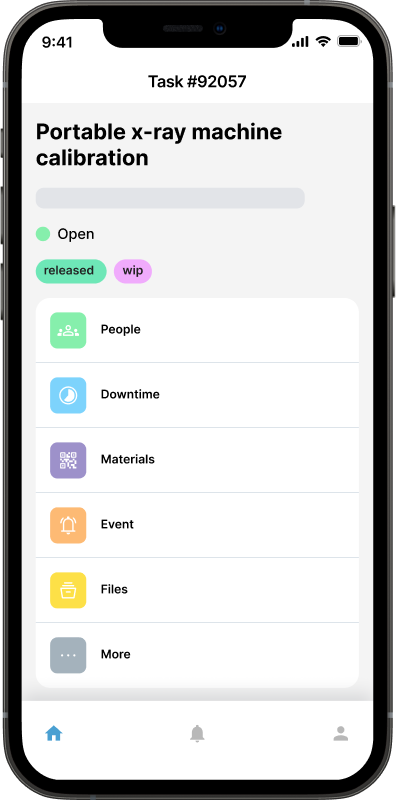
With a CMMS, issues can be reported in real time directly from the machine location. This enables earlier fault detection, fewer breakdowns, and clearer communication with maintenance teams. In Maintainly CMMS, requests are fast, accurate, traceable, and can be submitted without logging in.
Beyond reporting, CMMS data improves equipment reliability. Operators often notice subtle warning signs long before a failure occurs. Logging these early signals allows maintenance teams to intervene before downtime happens.
Production teams also gain visibility into scheduled preventive maintenance. Knowing when work is planned helps avoid surprises, reduces friction, and allows production schedules to adjust proactively.
Empowering Maintenance Teams
For maintenance teams, clarity and consistency are critical. A CMMS centralizes work order management so technicians can see priorities, instructions, asset history, required parts, safety steps, and deadlines in one place.
Over time, the system builds complete asset histories, recording every repair, inspection, failure, and part replacement. This makes it easier to diagnose recurring problems and recommend long-term improvements.
Standardized workflows further improve reliability. Templates, checklists, SOPs, and condition-based triggers ensure work is performed consistently, while also supporting training and onboarding for new technicians.
Enabling Smarter Procurement and Inventory Management
Procurement and inventory teams rely on accurate maintenance data to keep parts available without tying up capital in excess stock.
A CMMS automatically tracks real-time parts usage. Every time a part is consumed, inventory levels update instantly. This leads to better forecasting, fewer emergency purchases, and less downtime caused by missing components.
Automated reorder points ensure procurement stays ahead of demand, while historical data supports smarter purchasing decisions. Teams can analyze high-use parts, slow-moving inventory, cost per asset, and vendor performance. Purchasing shifts from reactive to strategic.
Strengthening Quality Assurance

Quality outcomes are closely tied to equipment condition. Poorly maintained assets can cause defects, waste, and safety risks.
A CMMS helps QA teams ensure that critical quality activities happen on schedule and are fully traceable, including:
Equipment calibration
Routine and ad-hoc inspections
Compliance documentation and records This reduces audit stress and improves product consistency.
Complete maintenance histories also support root cause analysis. QA teams can identify when defects started, what maintenance activities were involved, and how to prevent repeat issues. Trend data allows teams to catch quality drift early, before customers are affected.
Improving Safety and Compliance
Safety and compliance depend on consistency and documentation. A CMMS embeds safety into everyday maintenance activities.
Work orders can include PPE requirements, lockout/tagout steps, risk assessments, and SOPs, ensuring procedures are followed every time. Inspection reports, safety checklists, incident logs, and compliance certificates are stored automatically, keeping audits straightforward and stress-free.
By maintaining consistent schedules and clear records, a CMMS also reduces the likelihood of hazardous equipment failures.
Giving Finance Clear Cost Visibility
Finance teams often struggle to understand where maintenance spending truly goes. A CMMS provides transparency.
Each work order captures labor hours, spare parts, contractor fees, and total job costs. This gives finance real-time visibility into maintenance expenses.
Historical data supports better forecasting, helping teams anticipate annual maintenance costs, major repairs, replacement timelines, and CAPEX versus OPEX needs. CMMS insights also make the ROI of preventive maintenance visible, strengthening the business case for reliability investments.
Providing Executives with Real-Time Insight
Leadership needs visibility, not spreadsheets. A CMMS delivers real-time dashboards showing uptime, MTTR, MTBF, work order completion rates, and parts usage.
With long-term trends and performance data, executives can prioritize asset upgrades, training initiatives, process improvements, and budget allocation with confidence. Instead of reacting to problems, leadership gains a clear, organization-wide view of asset health.
How a CMMS Breaks Down Departmental Silos
A CMMS connects teams through shared data, aligned workflows, and an operational foundation:
A single source of truth that eliminates miscommunication
Real-time visibility into asset status and work progress
Clear ownership and accountability across departments Real-time notifications alert teams when work orders change, inventory reaches critical levels, equipment fails, or preventive maintenance is due.
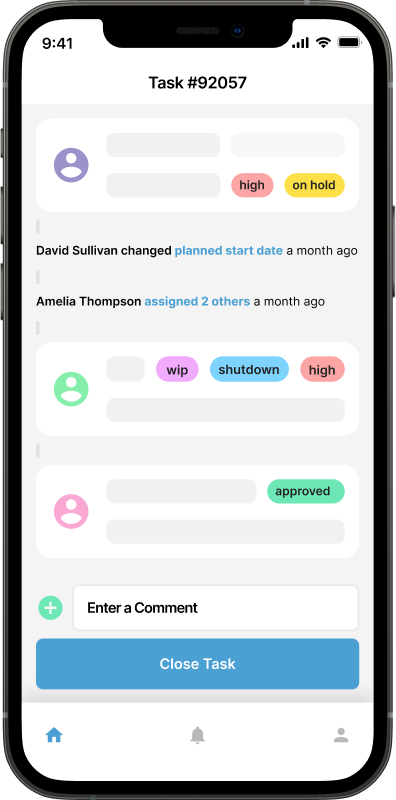
Role-based access ensures each group sees exactly what they need, while mobile access keeps everyone connected across the plant, office, or multiple sites. Photos, barcode scanning, and live updates keep communication flowing wherever work happens.
The Measurable Impact of Maintainly CMMS
When cross-functional teams align around a CMMS, manufacturers see tangible results: fewer breakdowns, higher uptime, faster work completion, improved audit readiness, reduced spare parts costs, more predictable maintenance spending, and better quality and safety outcomes.
A CMMS is more than maintenance software. It is a collaboration engine that helps the entire organization operate as one.
Maintainly an Essential tool for Manufacturing
Manufacturing is more interconnected than ever. To meet modern demands, organizations need systems that eliminate guesswork, share information instantly, and align teams around common goals.
Maintainly CMMS bridges the gap between the production floor and the office, giving every department the visibility and tools they need to stay aligned. Start a free trial and experience the difference firsthand.
Further Reading

How Does CMMS Help with Predictive Maintenance in Manufacturing?
Predictive maintenance uses data analytics, sensors, and machine learning to monitor equipment and prevent failures. It detects issues early, enabling timely repairs. Unlike scheduled maintenance, it’s condition-based, saving costs. CMMS supports this by managing and optimizing maintenance processes.
Read more →
CMMS for Manufacturing: Prevent Downtime and Maximize Output
CMMS is revolutionizing maintenance practices across manufacturing sectors. Whether you're a maintenance supervisor at a mid-size plant or running operations for a global manufacturer, CMMS can help you predict, prevent, and eliminate unnecessary equipment downtime.
Read more →
Optimize your Manufacturing with CMMS
Maintenance teams working to keep manufacturing plants operational have a hard enough job as it is. Tools like CMMS help streamline the maintenance process, keep the whole team on one page and give total visibility across the whole organisation.
Read more →
Unlocking Performance: How Internal KPIs and CMMS Transform Asset-Intensive Organizations
By focusing on the right metrics and leveraging the right tools, prticularly a Computerized Maintenance Management System (CMMS), organizations can turn maintenance into a strategic advantage rather than a cost center.
Read more →