The Best Hotel Maintenance Software in 2026: What the Hospitality Industry Actually Needs
 By Eve

Hotel maintenance is unlike maintenance in almost any other industry. The pressure is relentless, the margin for visible failure is razor-thin, and the workforce is uniquely transient. A broken air conditioner in a manufacturing plant is an operational problem. A broken air conditioner in a guest room at 11pm is a one-star review, a refund request, and a guest who won't be back.
For hotel maintenance teams, the right software isn't just a productivity tool: it's directly connected to guest satisfaction, online reputation, and revenue. Yet many properties are running on the wrong platform, paying too much, and watching adoption stall because the system is too complicated for the staff who are supposed to use it every day.
This article looks at the leading hotel maintenance software options, what they're each best suited for, and why the choice of platform matters far more than most hotel operators realise, especially when your maintenance team turns over faster than your linen.
Why Hotel Maintenance Software Is a Different Problem
Before comparing platforms, it's worth understanding what makes hotel maintenance a distinct use case.
The assets are diverse and high-stakes
A typical hotel property includes HVAC systems, elevators, pool and spa equipment, commercial kitchen appliances, guest room fixtures, fire safety systems, laundry facilities, and building systems across dozens or hundreds of rooms. Each asset has its own maintenance schedule, failure history, and compliance requirements, and a failure in any one of them can directly affect a paying guest.
Response time is measured in minutes, not hours
In manufacturing or facilities management, a non-critical asset failure might be acceptable for a day or two while a work order is processed. In a hotel, the window is much shorter. A guest complaint about a dripping tap, a faulty TV, or a malfunctioning lock demands a same-shift response. Maintenance software needs to support that urgency.
Staff turnover is among the highest of any industry
The hospitality sector consistently records some of the highest employee turnover rates in the economy. Maintenance departments are not immune. This creates a recurring and often underestimated problem: every time a technician leaves, onboarding their replacement onto the maintenance system takes time, costs money, and introduces risk. The harder the software is to learn, the longer that gap lasts, and the more maintenance falls through the cracks in between.
This last point is the one that most hotel operators don't fully account for when selecting a CMMS. Implementation cost and feature lists get most of the attention. Training burden and re-onboarding cost rarely appear on the comparison spreadsheet. They should.
 The Hospitality CMMS Landscape: Who's in the Market
The hotel maintenance software market ranges from hospitality-specific platforms built around guest experience workflows to general-purpose CMMS tools that hotels use alongside their property management systems. Here's an honest look at the major players.
HotSOS and Quore: Purpose-Built for Hotels, But Priced for Chains
HotSOS (now part of the Amadeus hospitality suite) and Quore are hospitality-native platforms designed around the specific workflows of hotel operations. They handle guest request routing, room status updates, housekeeping coordination, and maintenance tasks within a single system that integrates with property management systems like Opera.
For large branded hotel chains (Marriott, Hilton, Hyatt) these tools make sense. The integration with enterprise PMS platforms is mature, and the hospitality-specific workflows are well developed.
For independent hotels, boutique properties, regional hotel groups, and smaller chains, the calculus is different. HotSOS and Quore are priced and structured for enterprise adoption. Implementation requires significant time and often vendor involvement. The interfaces carry the complexity that comes with deep PMS integration. And the cost structure (typically per-room pricing models) can make them expensive relative to what a 40-room independent hotel actually needs from a maintenance system.
UpKeep: General CMMS With Growing Hospitality Presence
UpKeep is a well-regarded general CMMS that has built a solid reputation for its mobile experience and user-friendly interface. It's used across industries and has hotel customers, but it isn't purpose-built for hospitality.
For hotel maintenance teams that want a clean, modern CMMS without hospitality-specific workflows, UpKeep is a legitimate option. Its mobile app is strong, and the work order management features are solid. The limitations show up in reporting depth and in the absence of hospitality-native features like room-level tracking or guest request integration.
Pricing is also worth scrutinising. UpKeep's more useful features live behind higher pricing tiers, and the total cost of ownership for a small hotel team can be higher than the entry price suggests.
Snapfix: Simplified and Photo-First
Snapfix takes a deliberately simple approach. Rather than a full CMMS, it's built around a photo-based reporting system: technicians photograph an issue, assign it via a traffic-light status system, and track resolution. It's genuinely easy to learn and has found a following in hotels, resorts, and similar environments where staff may not be comfortable with traditional software.
The simplicity is both Snapfix's strength and its limitation. For logging and resolving reactive tasks, it works well and adoption is typically high. But it lacks the asset management depth, preventive maintenance scheduling, and reporting capabilities that a mature maintenance program requires. Teams that start with Snapfix often outgrow it as their maintenance operations become more structured.
Maintenance Care and eMaint: Enterprise Depth, Enterprise Complexity
Maintenance Care and eMaint are established CMMS platforms with hospitality clients and comprehensive feature sets. Both offer strong asset management, preventive maintenance scheduling, inventory tracking, and reporting capabilities.
The challenge for hotel teams is the same one that confronts any small or medium-sized maintenance operation looking at full-featured CMMS platforms: the implementation timeline is measured in weeks or months, the interface reflects the complexity of everything the system can do, and the training requirement is substantial. For a hotel maintenance team of five technicians with moderate software experience and an irregular roster, that complexity is a real barrier to adoption.
Both platforms also carry pricing structures that can escalate quickly once you factor in the features that hotel teams actually need: mobile access, reporting modules, and support. The headline price is rarely the real cost.
The Hidden Cost That Hospitality Operators Miss
Return for a moment to the turnover problem, because it deserves more attention than it typically receives in software evaluations.
The average annual turnover rate in hospitality maintenance departments is significant: estimates frequently place it between 30% and 70%, depending on property type, location, and market conditions. At 50% turnover, a hotel with ten maintenance staff is replacing five people per year. Each new hire needs to be onboarded onto whatever system the property is running.
If that onboarding process takes two weeks of supervised training and another two weeks before the technician is genuinely self-sufficient, that's a month of reduced productivity per new hire, multiplied by five people per year. At a property with tight labour margins, that's not a rounding error: it's a genuine operational cost.
Now apply that calculation to a platform with a steep learning curve. Every implementation hour a vendor charges at the outset is compounded each time the team turns over. Every manual the hotel has to produce to explain system workflows to new hires is time the maintenance manager isn't spending on maintenance. Every mistake made by an under-trained technician logging work against the wrong asset corrupts the asset history that the maintenance program depends on.
The software that takes the least time to learn doesn't just benefit day one. It benefits every day a new employee walks through the door.
What Good Hotel Maintenance Software Actually Looks Like
Before landing on a recommendation, here's the framework that hotel operators should be applying to any software evaluation.
Time to first value. How long does it take from signing up to running your first work order? Days is acceptable. Weeks is a warning sign. Months is a dealbreaker for a property that needs to be operational now.
Technician adoption, not manager adoption. Software looks simpler from a manager's desk than from a technician's phone at the end of a double shift. The right question isn't whether the system is easy for an administrator to configure. It's whether a technician who has been on the job for two weeks can open, update, and close a work order without help.
Re-onboarding cost. Given what we know about hospitality turnover, how long does it realistically take to get a new hire functional on the system? This should be a line item in any TCO calculation.
Core functionality without unnecessary complexity. Does the platform do what a hotel maintenance team actually needs (work orders, preventive maintenance, asset tracking, parts inventory, mobile access, and clear reporting) without burying those features in a system built for a refinery or a hospital network?
Pricing transparency. Is the feature set you need included in the base price, or does it require add-ons and module purchases that push the real cost significantly higher?
Why Maintainly Is the Right Choice for Hotel Maintenance Teams
Maintainly was built around a clear belief: that maintenance software should take minutes to learn, not days, and that the teams who benefit most from that philosophy are the ones who can least afford the alternative.
For hotel maintenance teams, that belief maps directly onto the realities of the job.
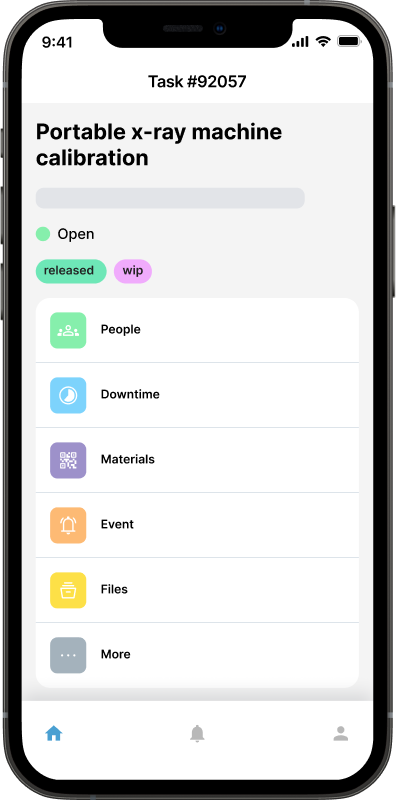
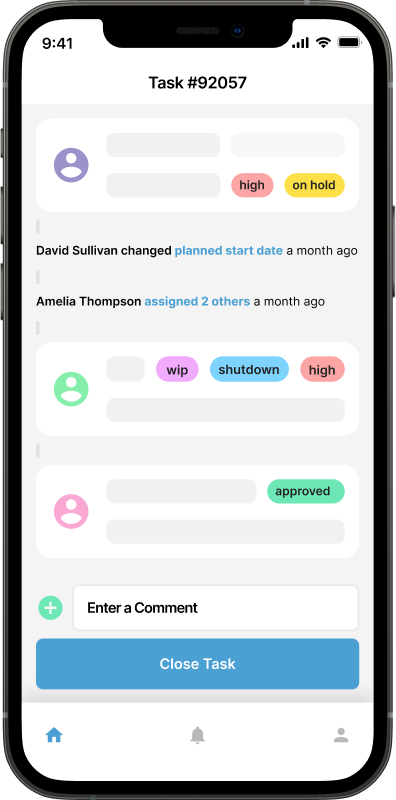
It's operational from day one. Hotel operators who switch to Maintainly aren't looking at a months-long implementation process. The platform is designed to be up and running within hours. Asset records can be set up quickly, QR labels can be printed directly from the system and attached to equipment, and technicians can begin logging work orders the same day the account is created. For a property that has been managing maintenance on whiteboards and group chats, this is a genuine step change in how quickly structured processes can take hold.
Technicians actually use it. Only 2% of Maintainly customers ever request formal training, not because support isn't available, but because the interface is intuitive enough that most users don't need it. For a hotel technician who is more comfortable with a spanner than a spreadsheet, that matters enormously. An app that a technician opens and immediately understands is one they'll actually use consistently. Consistent use is what creates the data that makes the entire maintenance program work.
Re-onboarding is near-zero. When a technician leaves and a new one starts, getting them functional on Maintainly takes an hour, not a week. In a sector where turnover is a structural feature of the workforce rather than an exception, that difference compounds into a material operational advantage over time.
The total cost of ownership is the lowest in the category for small and medium hotel teams. Maintainly's plans are transparent and inclusive. There are no surprise add-ons required to access mobile functionality or core reporting features. The implementation cost is effectively zero, because no consulting engagement is required to get started. And because training time is minimal, the indirect costs that bloat the TCO of more complex platforms simply don't apply.
It scales with the property. A boutique hotel with a two-person maintenance team and a regional group managing ten properties have different needs. Maintainly's modular structure means teams can activate inventory management, timesheets, and advanced features when they're ready for them, without paying for capabilities they don't yet need.
The Bottom Line for Hotel Operators
The hotel CMMS market offers plenty of options, and some of them are genuinely capable platforms for the right use case. Enterprise hospitality chains with dedicated IT resources, PMS integration requirements, and implementation budgets may well be better served by HotSOS, Quore, or a similarly deep hospitality-native system.
But for the independent hotel, the boutique property, the regional chain, and the mid-sized hospitality group (the organisations where the maintenance manager is also doing the ordering, the scheduling, and the compliance documentation) the calculus is different.
What you need is software that works from day one, that your technicians will actually open on their phones, that doesn't require a week of training every time someone new joins the team, and that doesn't cost more than it saves once you factor in implementation, add-ons, and re-training.
That's Maintainly. And in an industry where the guest experience lives or dies on whether maintenance gets done quickly and correctly, getting the tool right isn't a minor operational decision. It's a competitive one.
Further Reading

Tools to Manage Hotel HVAC, Plumbing, and Electrical Systems
Running a hotel is a 24/7 operation. Guests expect comfortable rooms, reliable hot water, working lights, and quiet, efficient climate control at all times. Behind the scenes, that comfort depends on three critical systems: HVAC, plumbing, and electrical infrastructure.
Read more →
Hotel Maintenance Software: Key Features and Why Your Hotel Needs It
If you manage a hotel, you know that running it is no easy job. Hotel managers have plenty of tasks on their plates, ranging from guest satisfaction to housekeeping. However, there’s one area that often gets overlooked: maintenance.
Read more →
Maximizing Efficiency in Hospitality: Tips for Implementing CMMS in a Hotel
In the hospitality industry, guest satisfaction is paramount, and a clean, functional, and well-maintained environment plays a significant role in achieving it. From air conditioning systems and elevators to lighting and housekeeping equipment, hotels rely on hundreds of assets that require regular maintenance.
Read more →