CMMS for Industrial Bakeries: Managing Equipment & Compliance
 By Steven Quayle

The smell of fresh bread might evoke artisan craft, but behind the loaves, rolls, and pastries rolling off a commercial bakery line lies a dense network of industrial equipment that runs hard, runs hot, and absolutely cannot stop.
For small and mid-sized industrial bakeries; the regional producers, contract bakers, and specialty manufacturers that sit between the corner patisserie and the multinational plant, equipment upkeep is both a survival issue and a compliance one. Yet this is precisely the segment that has historically been underserved by maintenance management software: too complex for a spreadsheet, too lean for an enterprise CMMS that costs more than their flour contract.
This post breaks down the bakery industry's unique maintenance demands and makes the case for why a modern, SME-focused CMMS is the right tool for the job.
The Industrial Bakery Landscape
Industrial bakeries operate in a uniquely unforgiving environment. Production runs are long, margins are thin, and the raw materials (flour, fat, sugar, water, yeast) create conditions that are hard on equipment: humidity, heat, sticky residues, airborne particulate, and the constant mechanical stress of high-volume throughput.
The SME segment of this industry is substantial. Thousands of regional and specialty bakeries employ between 10 and 250 people, supply supermarkets, foodservice chains, and hospitality clients, and operate under the same food safety regulations as their much larger competitors. They face:
Strict regulatory oversight: HACCP, FDA (or local food authority) compliance, and third-party audits like SQF and BRC all require documented preventive maintenance and sanitation records.
Perishable inputs and time-sensitive orders: A broken proofer at 4am doesn't just delay production; it can mean scrapping an entire batch and missing a morning delivery window.
Skilled maintenance labor shortages: Many SME bakeries rely on one or two maintenance technicians who need to triage, schedule, and document everything across a large asset inventory.
Tight capital budgets: Unplanned downtime is disproportionately damaging when there's no redundant line to absorb it.
 The Equipment: What's Running, and What Breaks
Industrial bakeries run a diverse and demanding set of assets. Understanding what each does, and what happens when it fails, makes the maintenance case obvious.
Mixing and Dough Processing
Spiral mixers and planetary mixers are the workhorses of any bakery. Running for hours at a time under heavy load, they're subject to motor wear, bowl seal degradation, dough hook fatigue, and lubrication issues. A seized gearbox mid-shift can halt production for an entire product line.
Dividers and rounders portion and pre-shape dough at speed. Cutting blades dull, pressure plates wear unevenly, and accumulated dough residue can cause mis-weights or jamming if cleaning and calibration aren't on a regular schedule.
Sheeters and laminators are critical for croissants, puff pastry, and flatbreads, and depend on precisely calibrated roller gaps. Even a fraction of a millimetre of wear affects product consistency. Roller bearings and drive chains need regular inspection.
Proofing and Fermentation
Proofing cabinets and tunnel proofers maintain precise temperature and humidity for fermentation. Heating elements, humidity sensors, and door seals all degrade over time. A failed temperature controller doesn't just stall production: it can ruin an entire batch of dough that took hours to develop.
For sourdough and longer-fermentation products, temperature deviation during proofing can mean total batch loss and a scramble to communicate with customers.
Ovens
Deck ovens, rack ovens, tunnel ovens, and convection ovens represent the most capital-intensive assets on the floor, and the ones where failure is most catastrophic. Key maintenance concerns include:
Burner assembly and ignition system integrity
Steam injection systems (critical for crust quality in artisan breads)
Door gasket and seal condition (energy efficiency and heat consistency)
Conveyor belt wear in tunnel ovens
Temperature sensor calibration
A tunnel oven running at the wrong temperature across a 60-metre belt doesn't just produce bad product: it can destroy an entire shift's output before anyone notices.
Cooling and Refrigeration
Spiral coolers, blast chillers, and cold rooms are essential for food safety and shelf-life management. Refrigeration systems require consistent attention: condenser coils foul quickly in bakery environments rich with flour dust and sugar particles, refrigerant levels need monitoring, and evaporator fan motors work under continuous load.
Cold chain failure has direct food safety implications, and documented preventive maintenance on refrigeration is a key audit requirement under most food safety standards.
Packaging Lines
Slicers, baggers, flow wrappers, labellers, and case packers are where product meets the customer. These are high-cycle machines with a lot of moving parts: blades, sealing elements, belts, sensors, and pneumatic systems. A packaging line stoppage is particularly costly because finished product may be sitting, unpackaged, with a ticking shelf-life clock.
Blade sharpness and seal bar temperature are especially critical, both affect product quality directly and are often the first things inspected in a retail audit.
Utilities and Support Systems
Often overlooked until they fail:
Compressed air systems: power pneumatic actuators across much of the line. Compressor maintenance, filter changes, and leak management are critical, and compressed air quality standards (ISO 8573) apply in food production environments.
Water treatment and steam systems: essential for ovens, cleaning, and in some bakeries, ingredient hydration. Scale buildup, filter replacement, and pressure maintenance all need scheduled attention.
HVAC and ventilation: manage temperature and air quality on the production floor, directly affecting both product and food safety.
Pest control barriers: door seals, screens, air curtains are physical infrastructure that requires regular inspection and documentation for audit purposes.
Why Maintenance Fails in SME Bakeries (Without a System)
Most small and mid-sized bakeries start out managing maintenance the way most SMEs do: a mix of institutional knowledge in the head of one experienced technician, a paper logbook, and a whiteboard. This works, until it doesn't.
The failure modes are predictable:
Reactive-only culture: Without scheduled preventive maintenance, everything becomes a breakdown. The cost of reactive maintenance (overtime labour, emergency parts, production loss, rushed rescheduling) consistently dwarfs the cost of prevention.
Knowledge walking out the door: When the one person who knows the oven's quirks leaves or is unavailable, the institutional memory goes with them. Asset histories, past failure patterns, preferred repair procedures; none of it is captured.
Audit exposure: Food safety audits require documented evidence of preventive maintenance. "We maintain things when they break" is not a compliant answer. Without a system generating records automatically, compliance documentation becomes a last-minute scramble.
No visibility across assets: A bakery with 40 assets and one maintenance tech has a prioritisation problem. Without a system, the squeaky wheel gets the oil, and the quietly degrading conveyor bearing gets ignored until it seizes.
Why a CMMS Built for SMEs Changes the Equation
Enterprise CMMS platforms built for manufacturing conglomerates are not the answer for a regional bakery with 30 employees. They're expensive to license, slow to implement, require dedicated IT support, and come with layers of complexity that a lean maintenance team will never use.
What SME bakeries actually need is:
Fast implementation: up and running in days, not months, with an asset register that can be built incrementally
Simple work order management: easy to create, assign, and close out tasks without training a tech on a complex system
Preventive maintenance scheduling: calendar- and meter-based triggers for all the recurring tasks that prevent the failures above
Mobile-first access: a technician on the floor needs to log a completed PM or raise a work order from a phone, not walk to a terminal
Compliance-ready record keeping: automatic generation of maintenance history that can be produced in an audit without rebuilding records from scratch
Sensible pricing: built around the reality of an SME budget
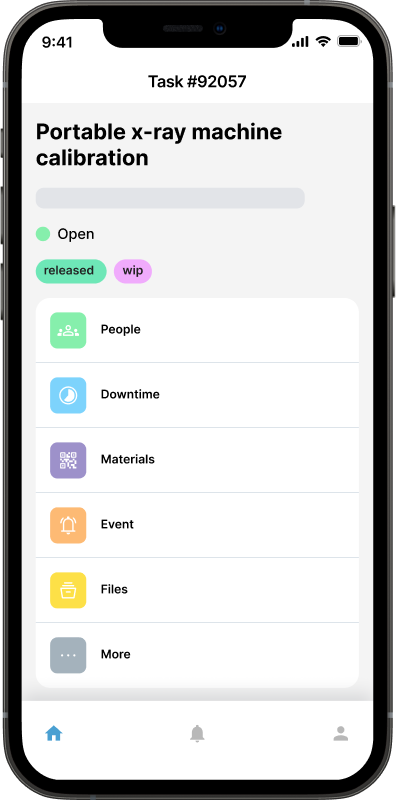
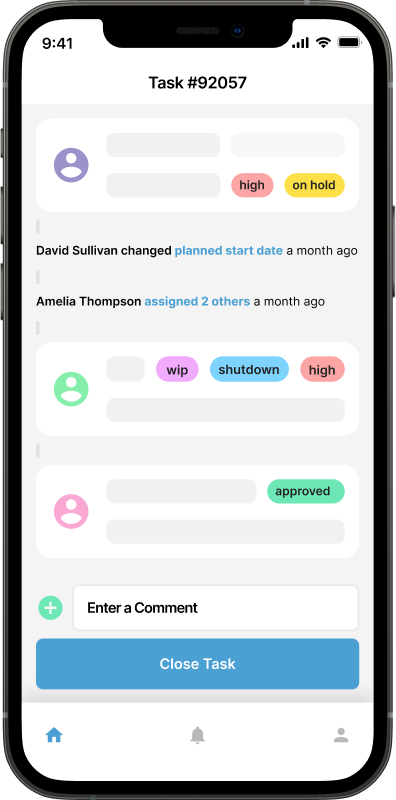
This is precisely the space Maintainly was built for. The platform is designed around the reality of small and mid-sized operations: clean, modern interface; fast asset setup; mobile-first work order management; and preventive maintenance scheduling that runs in the background so techs stay ahead of failures rather than chasing them.
For a bakery, the practical impact is direct. Proofer temperature sensors get checked on schedule. Oven door gaskets get replaced before they fail during a production run. Compressor filters get changed before air quality becomes a food safety issue. And when the auditor asks for the last 12 months of refrigeration maintenance records, they're generated in a few clicks.
Getting Started: A Practical Path
For an SME bakery moving from ad-hoc maintenance to a managed system, the path doesn't need to be overwhelming:
Build your asset register: Start with your highest-criticality assets: ovens, mixers, refrigeration, packaging lines. Add the rest over time.
Document recurring PMs: For each asset, identify the manufacturer-recommended service intervals and add them as recurring work orders. This alone will surface a lot of neglected tasks.
Log the backlog: Any known issues or deferred repairs become work orders immediately, so nothing falls through the cracks.
Assign and track: As work orders are completed, the system builds a maintenance history automatically, which feeds directly into compliance documentation.
Review and optimise: Over time, the data will show you where failures cluster, which assets cost the most to maintain, and where preventive schedules might need adjustment.
CMMS for Industrial Bakeries
Industrial bakeries run on precision; precise recipes, precise temperatures, precise timing. It's only logical that the maintenance of the equipment delivering that precision should be equally systematic. For SME bakeries, a purpose-built CMMS isn't a luxury reserved for large manufacturers. It's the difference between a production floor that runs predictably and one that's perpetually one equipment failure away from a crisis.
The bread doesn't bake itself. Neither does reliable uptime.
Maintainly is a CMMS built specifically for small and mid-sized operations. It's fast to implement, easy to use in the field, and designed to keep your team ahead of failures rather than reacting to them. Start a free trial today.
Further Reading

Optimize your Manufacturing with CMMS
Maintenance teams working to keep manufacturing plants operational have a hard enough job as it is. Tools like CMMS help streamline the maintenance process, keep the whole team on one page and give total visibility across the whole organisation.
Read more →
CMMS for Manufacturing: Prevent Downtime and Maximize Output
CMMS is revolutionizing maintenance practices across manufacturing sectors. Whether you're a maintenance supervisor at a mid-size plant or running operations for a global manufacturer, CMMS can help you predict, prevent, and eliminate unnecessary equipment downtime.
Read more →
How Does CMMS Help with Predictive Maintenance in Manufacturing?
Predictive maintenance uses data analytics, sensors, and machine learning to monitor equipment and prevent failures. It detects issues early, enabling timely repairs. Unlike scheduled maintenance, it’s condition-based, saving costs. CMMS supports this by managing and optimizing maintenance processes.
Read more →