How CMMS Schedules Reactive Maintenance Issues According to Priority
 By Eve

When a boiler fails, a conveyor belt stops, and a toilet overflows (all in the same morning) who gets the call first? Without a system that automatically prioritizes reactive maintenance requests, the answer is usually whoever shouts loudest or whoever reaches the maintenance manager's phone first. This approach doesn't just feel chaotic: it actively costs money, extends downtime, and puts safety at risk.
A CMMS (Computerized Maintenance Management System) solves this by automatically triaging every incoming reactive work order and scheduling them according to a defined priority framework. The result: your most critical issues are addressed first, every time, without relying on human judgment in the heat of the moment.
The Problem with Ad-Hoc Reactive Maintenance
Without priority logic, teams often treat maintenance like a simple queue: first in, first out. A leaky faucet submitted at 8 AM gets attention before a tripped circuit breaker reported at 8:30 AM. This isn't just inefficient; it can be dangerous. Manual triage also places a heavy cognitive burden on supervisors who must constantly re-evaluate competing demands, interrupting every other part of their day.
The real cost of ad-hoc reactive maintenance shows up in several ways:
Safety incidents caused by delayed responses to hazardous failures
Extended downtime because critical repairs waited behind minor issues in the queue
Manager burnout from constant mental triage of competing urgent requests
No audit trail: without a system, it's impossible to show why something wasn't addressed sooner
How CMMS Assigns Priority to Reactive Work Orders
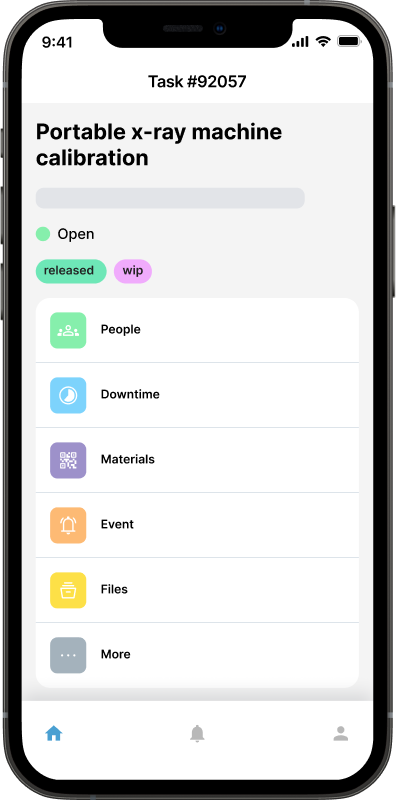
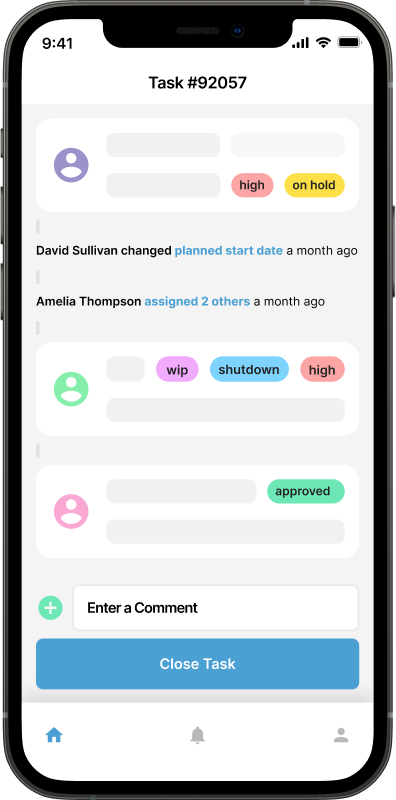
A CMMS schedules reactive maintenance issues according to priority by assigning each incoming work order a priority level at the point of submission. Most systems use a four-tier model that maps urgency to defined response expectations:
Critical: Immediate safety risk, production stoppage, or compliance breach. Examples: gas leak, elevator failure, electrical hazard.
High: Major operational impact if not addressed within hours. Examples: HVAC failure in a server room, primary conveyor belt jam.
Medium: Noticeable disruption but operations can continue. Examples: broken door lock, malfunctioning alarm panel.
Low: Minor inconvenience with no operational impact. Examples: burnt-out light in a storage room, cosmetic damage to non-critical equipment.
The priority level controls scheduling. Critical issues jump to the top of the work queue immediately, regardless of when they were submitted. Low-priority items are batched and scheduled during planned maintenance windows when technician capacity allows. To understand how these compare to planned work, see our guide on preventive vs reactive maintenance.
The Scheduling Logic Behind Priority-Based CMMS
Priority isn't just a label: it drives concrete scheduling behavior. A well-configured CMMS handles four things automatically once a reactive work order comes in:
Instant notifications to the right people. Critical work orders send alerts to both the assigned technician and the supervisor via email, SMS, or push notification. There's no waiting for a morning standup.
Response time targets (SLAs). Each priority tier gets a target response window: for example, Critical within 1 hour, High within 4 hours, Medium same day, Low within the week. The CMMS tracks these automatically and escalates if a deadline is missed.
Dynamic queue reordering. As new reactive requests arrive, the CMMS continuously re-sorts the active work queue by priority. A technician finishing one job sees their next assignment already updated, based on current priority, not submission time.
Skill-matched assignment. Many CMMS platforms match work orders to technicians based on skills and availability, ensuring a critical electrical issue goes to a qualified electrician, not just the first available person on the list.
 Why This Matters for Teams Already Stretched Thin
Small and medium maintenance teams typically operate with limited staff and no spare capacity. When reactive issues pile up, even experienced managers lose track of what's truly urgent. The cognitive load of constant mental triage ("is this more important than that?") is both exhausting and error-prone.
CMMS removes that burden by encoding your priority logic into the system once. After that, every new reactive request is automatically evaluated, ranked, and surfaced to the right person with the right context. The manager's role shifts from firefighting to oversight. This is especially valuable when managing multiple sites: a reactive issue at one location gets ranked and assigned appropriately without physically reaching the manager's desk.
For a deeper look at how CMMS handles crisis situations, see how CMMS plays a key role in emergency maintenance.
Priority Scheduling in Practice
Here's how priority-based scheduling plays out in three common real-world scenarios:
Manufacturing floor. A conveyor belt motor overheats and trips. A technician submits a reactive work order marked Critical. Within minutes, the maintenance supervisor receives an alert, the work order jumps to the top of the active queue, and the most qualified available technician is assigned. In a manual system, the supervisor might not know about the issue until the next check-in call, by which point the production line has been down for an hour.
Hotel operations. Three guest rooms report issues simultaneously: a clogged drain, a broken safe, and a non-functional heating unit. The CMMS automatically ranks heating as High (guest comfort and safety), the safe as Medium, and the drain as Low. Maintenance sees a prioritized list without any supervisor intervention. Guests in a cold room are helped first. See how hotel CMMS improves maintenance issue tracking for more on this approach.
Office facility. A fire suppression system triggers a fault alert over the weekend. Even with no supervisor on-site, the CMMS sends an immediate Critical notification to the on-call technician and facility manager. The audit trail records the time of the alert, the acknowledgment, and the resolution, critical for insurance and compliance purposes.
Setting Up Priority Rules in Your CMMS
Getting the most out of priority-based scheduling requires a small amount of upfront configuration. Here's a practical starting framework:
Define your priority tiers. Agree with your team on what constitutes Critical, High, Medium, and Low for your specific operation. These definitions vary by industry and asset type: a conveyor belt stoppage is Critical in manufacturing but not in a hotel.
Set realistic response time targets. Decide on achievable SLA windows for each tier based on your actual team size. Targets that can't be met will erode confidence in the system.
Configure escalation rules. What happens if a Critical issue isn't acknowledged within 30 minutes? The CMMS should automatically escalate to a backup contact: this is your safety net for nights, weekends, and high-volume periods.
Brief your requesters. Priority-based scheduling only works if work orders are filed accurately. Train anyone who submits requests (staff, tenants, guests) on how to describe urgency clearly.
Review your priority distribution regularly. Audit your work order data quarterly. If everything is marked Critical, the system loses its value. Recalibrate based on real outcomes and team feedback.
To better understand the vocabulary your team will use when logging reactive issues, see our guide to CMMS maintenance terms.
Order Over Chaos
Reactive maintenance will always be part of operations: equipment fails, systems break down, and things go wrong without warning. The question isn't whether reactive issues will occur, but whether your team has a system to handle them in the right order. A CMMS that schedules reactive maintenance issues according to priority replaces guesswork and chaos with structured, defensible decision-making. The loudest voice in the building no longer determines what gets fixed first. Your priority logic does.
Further Reading

Enhancing Guest Experience: The Importance of Hotel CMMS for Maintenance Issue Tracking
When maintenance issues arise during a guest's stay, how promptly and effectively they are addressed can significantly impact their overall satisfaction.
Read more →
Preventive vs Reactive Maintenance: A Complete Guide
Preventive, corrective, reactive, condition-based and predictive maintenance explained, which assets deserve a schedule, and how a CMMS makes the shift from firefighting to planned work.
Read more →
Emergency Maintenance: How CMMS Plays a Key Role in Limiting Damage During Crises
Emergencies are unpredictable, and the ability to manage them efficiently can make the difference between a quick recovery and prolonged operational downtime. This is where a Computerized Maintenance Management System (CMMS) becomes crucial.
Read more →
Mobile CMMS for Transportation: Why Maintenance Software Is Critical for Fleet & Infrastructure in 2026
Transportation operations in 2026 look very different from a decade ago. Fleets are larger, compliance standards are stricter, fuel and parts costs are unpredictable, and customer expectations are higher than ever. Whether you manage buses, delivery vans, municipal vehicles, rail assets, or airport ground equipment, one thing is clear: downtime is expensive.
Read more →