Hotel Maintenance App: How to Replace Sticky Notes with Requests That Get Fixed
 By Gui
At 7:40 on a busy checkout morning, a housekeeper tells the front desk that the shower in room 312 is draining slowly. The agent writes "312 drain" on a sticky note and presses it to the edge of the monitor. By noon the note has moved to a stack beside the keyboard. The engineer on duty never walks past that desk. At 9 p.m. a new guest checks into 312, showers, and calls down because there are two inches of water standing in the tub.
Nobody in that story was careless. The note did exactly what a sticky note does: it recorded the problem for the one person who wrote it, in one place, with no owner and no way to tell anyone it had been fixed. A hotel maintenance app replaces it by giving every request a location, an owner, a priority and a status that the people who need it can see.
This guide covers the request side of hotel maintenance only. It walks through how front desk and housekeeping staff log an issue against a specific room or asset, how that request reaches engineering in the right order, and how the result gets back to the staff facing the guest.
Where the sticky note system breaks
Few hotels run on sticky notes alone. They run on a mix: notes at the front desk, a logbook in the engineering office, radio calls, a group chat, and whatever the night auditor remembers to mention at handover. Each one fails in its own way, but they share four gaps.
No precise location. "312 drain" could be the tub, the sink or the shower. "Lobby light" could be any of forty fixtures. The engineer spends the first ten minutes of the job finding the problem.
No owner. A note on the desk belongs to everyone who walks past, which means it belongs to nobody. A radio call gets an "on it" that nobody writes down.
No timestamp or history. You cannot tell whether a request is two hours old or two days old, or whether this is the third time the same room has reported the same drain.
No way back. When the job is done, the engineer has no reason to find the person who wrote the note. The front desk keeps the room blocked, or sells it without knowing whether it was fixed.
Shift changes make all four worse. A hotel runs around the clock, and a request logged by the morning shift has to survive two handovers before the overnight engineer sees it. Paper does not survive handovers well.
What the replacement app has to do
So which app replaces sticky notes for hotel maintenance requests? Any tool that does the following, used by everyone who currently writes a note, will work. A tool that skips one of these will quietly bring the notes back.
Every room and major asset exists as a record, so a request attaches to a place rather than a description.
Anyone who spots a problem can log it from a phone in under a minute, including staff who never log into anything else.
Each request gets a priority and an assignee as soon as engineering sees it.
The person who reported it, and the front desk, can see when it is done.
A shared spreadsheet or a group chat meets the second point and fails the rest. A general task app meets the third and fails the first, because it has no idea what a room or an ice machine is. When a request cannot attach to a room, staff go back to writing the room number on a note, and the notepad returns. A maintenance-specific work order system (often called a CMMS) is built around the location and asset record, which is the piece the others are missing.
Step 1: Give every room and asset an address
Before anyone can log a request against the shower in room 312, room 312 has to exist in the system. Set up locations the way your staff already talk about the building: property, then building or wing if you have more than one, then floor, then room. Add public and back-of-house spaces as locations of their own, such as the lobby, each restroom, the pool, the kitchen, the laundry and the boiler room.
Under each location, add the assets that actually generate requests. You do not need every lamp. Start with the equipment that breaks often, or that costs you a room night when it does:
Guest room PTAC or fan coil units, and in-room water heaters if you have them
Ice machines and vending machines on each floor
Elevators, logged as assets even when a contractor services them, so requests have somewhere to land
Laundry washers and dryers
Kitchen refrigeration, dishwashers and cooking equipment
Pool pumps, filters and heaters
Guest room fixtures like sinks, toilets and showers can stay at the room level. "Room 312, shower draining slowly" is specific enough for the engineer, and tracking every drain as its own asset adds setup time without changing what anyone does.
Put a QR code where the problem gets noticed
QR codes are what make the location record useful at the moment someone reports a problem. A housekeeper who scans a code inside the closet door or beside the bathroom light switch gets a request form with the room already filled in. Nobody types a room number, and nobody picks the wrong floor. For shared equipment, put the code on the machine itself: the ice machine on floor 4, the third dryer in the laundry. There is more on placement and labeling in this guide to using asset QR codes to speed up maintenance tasks.
Placement matters more than people expect. A code on the outside of a guest room door gets scanned by guests, which invites guest requests whether you planned for them or not. A code inside a housekeeping closet or on the back of a service panel is seen only by staff. Pick one rule for the property and keep to it, so staff always know where to look.
 Step 2: Make logging faster than writing a note
The app only replaces sticky notes if it is quicker than a sticky note. That is the bar. A front desk agent with a guest at the counter will not open a laptop, log in, click through three menus and fill out eight fields. They will grab the pad.
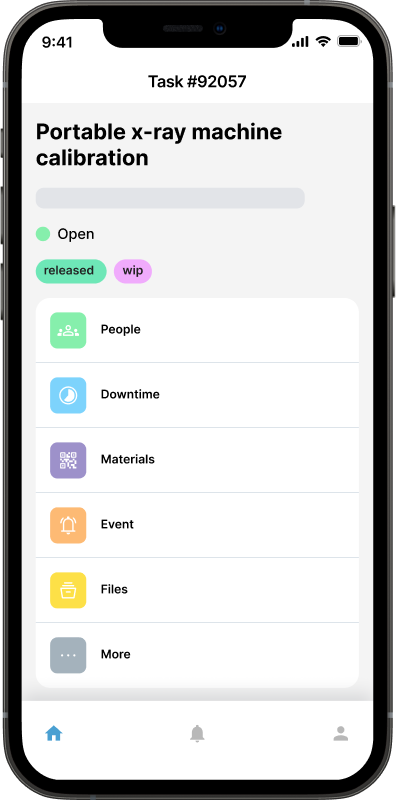
So the request path for frontline staff should look close to this: scan or tap, confirm the location, write one line, take a photo, submit. Everything else (priority, category, assignee, due time) gets added by engineering afterwards.
Who logs requests, and how
Housekeeping finds most problems first, because they are in every occupied room every day. Give them the QR path on a shared phone or their own device, and make the photo step one tap. A photo of a cracked tile or a stained ceiling tells the engineer which parts to bring before they leave the shop.
Front desk handles guest complaints, which usually arrive by phone. They need a short form they can fill in while the guest is still on the line, with the room picked from a list rather than typed.
Night audit and security walk the property when engineering is thinnest. Their requests often wait for the morning shift, so those requests need to land in the queue the morning engineer opens first, not on a desk.
Guests, if you choose. Some hotels put a request code in every room. Others keep guest requests flowing through the front desk, so a person can apologize and offer a room move. Make this decision on purpose rather than by accident of where the codes went.
Photos do more work than any text field. Seeing how image uploads on maintenance requests work shows why: the engineer sees the leak, the error code on the display or the broken hinge before walking up four floors, and arrives with the right tool the first time.
Engineers need the same view on their phones, so they can pick up the next job from the floor they are already on instead of walking back to the shop between jobs. This overview of mobile CMMS apps for maintenance teams covers what that looks like day to day.
The fields worth asking for
Keep the frontline form to what only the reporter knows:
Location, prefilled from the QR code when possible
What they saw, in their own words
A photo
Whether the room is occupied, vacant, or due to be sold tonight
That last field matters more than any category picker. "Drain slow, room vacant until tomorrow" and "drain slow, guest arriving at 3" describe the same fault with very different deadlines, and only the person standing in the room knows which one it is.
Step 3: Triage by guest impact, not by who asked loudest
With sticky notes, the job that gets done first is the one whose author caught the engineer in the corridor. With a request system, someone on the engineering side reviews new requests and sets a priority. That might be the chief engineer, the shift lead, or on a small property the one engineer on duty. Four levels, keyed to whether a guest is affected, are enough to sort the queue.
Emergency: a safety risk or active damage. Water coming through a ceiling, a guest stuck in an elevator, no heat to a floor in cold weather, a fire door that will not close. Respond now, and phone someone as well as logging it.
Guest-affecting, occupied: a problem in a room with a guest in it, such as no hot water, a dead TV or a rattling HVAC unit. Same shift, ideally within the hour.
Guest-affecting, before arrival: the room is vacant but sold for tonight. It has to be done before check-in, or the guest gets moved and the room gets blocked.
Routine: a loose towel bar in a vacant room, a scuffed corridor wall, a flickering light in back of house. Batch these into the day's planned work.
Room 312, with a request system
Run the opening example again with this in place. The housekeeper scans the code at 7:40, writes "shower drains slowly, water pooling", attaches a photo and marks the room as due for a 3:00 arrival. The shift lead reviews the queue at 8:00, sets the request to guest-affecting before arrival, assigns it to the engineer working that floor and gives it a due time of 1:00. The engineer clears the trap at 10:15, tests it, and closes the request with a note. The front desk sees it complete and releases the room. The 3:00 guest never learns there was a problem.
Nothing in that sequence needed anyone to be in the right corridor at the right time. For more on how priority sets the order of reactive work, see how a CMMS schedules reactive maintenance by priority.
One warning: if everything is urgent, nothing is. Give frontline staff no priority picker at all, or a single "this is an emergency" checkbox, and let engineering set the rest. Reporters overstate urgency because they are the ones with the guest in front of them. That is human and reasonable, and it is also why they should not be the ones sorting the queue.
Step 4: Close the loop with the front desk
The step sticky notes never had is the one guests notice most. When engineering finishes a job, three things need to happen.
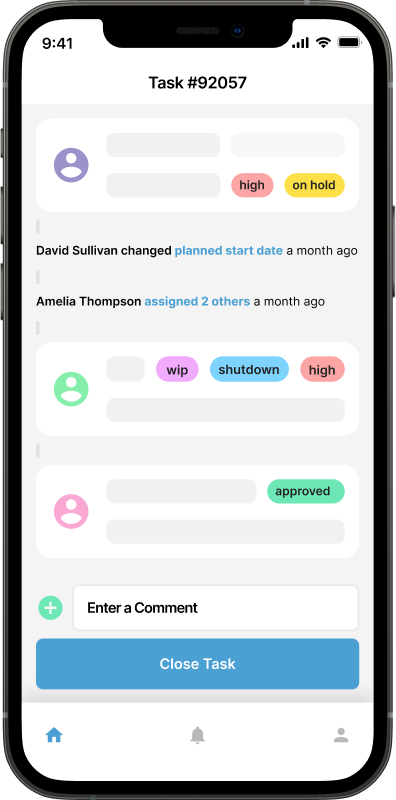
First, the request is marked complete with a short note on what was done. "Cleared hair from trap, tested, draining normally" tells the next engineer far more than "done", and it is the record you will want if the same drain comes back next week.
Second, the person who reported it finds out. Whether that happens through a push notification, an email, or a status the front desk can see on its own screen depends on the tool, but it has to happen without the engineer walking to the desk. Check how an app handles updates to the requester before you choose it, because this is where general task apps tend to fall short.
Third, if the room was blocked, someone returns it to service in the property management system. Unless your maintenance app is connected to the PMS, decide who owns this step. Give it to whoever already changes room status in the PMS, and have the completion update prompt them. Without a named owner, a room fixed at noon stays out of order until somebody notices it at the evening inventory check, and that is a room night lost to paperwork.
Some hotels add a fourth step for anything a guest complained about: housekeeping or the duty manager checks the room before the next guest arrives. That check can live as a short checklist on the same request instead of a separate process with its own paperwork.
Rolling it out without losing a week
The software is the easy part. The hard part is the first two weeks, when the notepad is still within reach.
Move the existing notes in on day one. Collect every sticky note, logbook entry and unanswered chat message, and enter them as requests before anyone else starts using the system. Staff then find their own old notes in the app, which tells them this is the real list.
Start with housekeeping and engineering, then add the front desk. Housekeeping logs the most requests and engineering acts on them, so getting those two teams on it covers most of the volume. The front desk joins once the queue is trustworthy and the room list is complete.
Take the pad away. Literally. If a notepad stays at the front desk, it will be used on busy nights. Replace it with a printed card showing the QR code for the general request form.
Cover the overnight shift in person. Night staff miss training because they are not on site when it happens. Walk the night auditor through the app at the start of their shift, or overnight requests will keep arriving on paper.
Show people what happened to their requests. Reporters who see their requests completed keep reporting. Reporters whose requests disappear go back to catching the engineer in the corridor. The loop in Step 4 is your adoption plan as much as it is a process step.
What a quarter of request history tells you
Once requests live in one place, they stop being interruptions and start being data. After a few months, pull the request history and look for patterns:
Rooms that appear again and again, which often point to a failing unit or a plumbing problem behind the wall rather than bad luck
Assets with repeat requests, such as the floor 4 ice machine that jams every week and is either due for replacement or missing a preventive task
How long guest-affecting requests take from report to completion, split by shift, which shows where coverage is thin
Requests that still arrive by phone or radio rather than through the app, which shows who needs more coaching
The second pattern is where request handling turns into prevention. If the same PTAC filters clog every few weeks, the fix is a scheduled filter change, not a faster response to complaints. At that point the request system starts reducing the number of requests, instead of only organizing them.
If you want to see this request flow with rooms, assets and QR codes, look at how Maintainly works for hotel and hospitality maintenance teams. Start with one floor's rooms and the housekeeping team, and take the first sticky note off the monitor the same day.
Further Reading

Hotel Maintenance Software: Key Features and Why Your Hotel Needs It
If you manage a hotel, you know that running it is no easy job. Hotel managers have plenty of tasks on their plates, ranging from guest satisfaction to housekeeping. However, there’s one area that often gets overlooked: maintenance.
Read more →
Enhancing Guest Experience: The Importance of Hotel CMMS for Maintenance Issue Tracking
When maintenance issues arise during a guest's stay, how promptly and effectively they are addressed can significantly impact their overall satisfaction.
Read more →
The Best Hotel Maintenance Software in 2026: What the Hospitality Industry Actually Needs
Choosing hotel maintenance software isn't just about features; in an industry with some of the highest staff turnover of any sector, how quickly your team can learn the system matters as much as what it can do. We compare the leading hospitality CMMS platforms and explain why ease of use and fast onboarding should be at the top of every hotel operator's evaluation criteria.
Read more →
Preventive Maintenance for Hotels: A Checklist
Maintaining a hotel involves preventive maintenance for various assets to ensure a comfortable, safe, and enjoyable experience for guests. Here's a high-level list of key assets at a hotel that typically require planned maintenance.
Read more →