Restaurant CMMS: How to Keep Your Commercial Kitchen Running
 By Gui

A fryer goes down during the dinner rush. A walk-in cooler loses temperature overnight. The hood exhaust fails the day before a health inspection. For restaurant operators, equipment failures are not just inconvenient: they can halt service, spoil inventory, and trigger costly violations. Unlike office buildings or warehouses, restaurants run equipment hard every day in hot and humid conditions that accelerate wear. That is why more restaurant operators are turning to CMMS software to get ahead of breakdowns before they happen.
What Makes Restaurant Maintenance Different
Restaurants operate some of the most demanding equipment in any industry. Commercial ranges, deep fryers, refrigeration units, dishwashers, and HVAC systems run for 10 to 16 hours a day, often seven days a week. That duty cycle is far more intense than most other operating environments, and the consequences of failure are immediate.
There are also compliance pressures unique to food service. Health inspectors look for documented cleaning schedules, grease trap service records, and evidence that refrigeration units are maintaining safe temperatures. Without written records, operators have no proof of compliance, even if they have been doing everything right.
Most small restaurant operators manage maintenance through paper logs, sticky notes, and memory. That approach works until it does not, and when it fails, the timing is usually the worst possible.
The Real Cost of Kitchen Equipment Downtime
When a walk-in cooler fails overnight, an operator can lose an entire refrigerator worth of perishable inventory: meat, dairy, and produce that represents a significant portion of weekly food cost. When a commercial dishwasher breaks down on a busy night, service slows, table turns drop, and staff spend their shift hand-washing dishes instead of serving guests.
Reactive maintenance (fixing things after they break) is significantly more expensive than preventive maintenance. Emergency service calls for commercial refrigeration or cooking equipment typically carry premium rates, and parts may take days to arrive. A consistent preventive maintenance program extends equipment life, reduces repair costs, and catches issues before they become service-stopping failures.
The benefits of using a CMMS extend beyond tracking work orders: they include measurable reductions in emergency repairs, extended asset lifespans, and audit-ready compliance records.
Key Equipment to Track in a Restaurant CMMS
Not every piece of equipment needs the same level of attention. A good CMMS helps prioritize based on criticality: the equipment whose failure would most directly impact service or food safety gets the most thorough maintenance schedule.
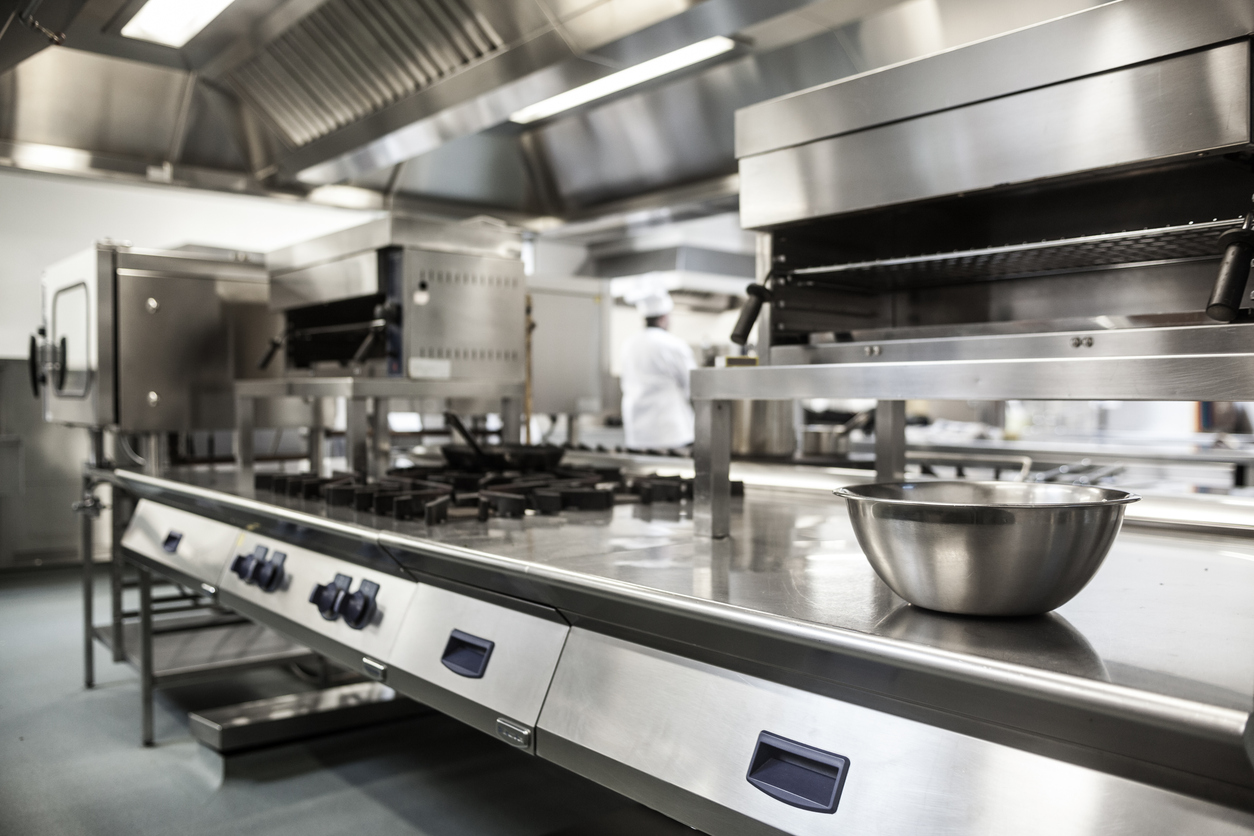
Refrigeration units are typically the highest priority. Walk-in coolers, reach-in refrigerators, and freezers should have regular temperature verification, coil cleaning, and door gasket inspections scheduled. A failing gasket costs little to replace; a failed compressor costs significantly more, and losing the contents costs more still.
Commercial cooking equipment (including fryers, ranges, ovens, and grills) needs cleaning schedules, burner inspections, and calibration checks. Fryers benefit from regular oil filtration maintenance, which extends oil life and improves food quality. Scheduling these as recurring tasks in a CMMS ensures nothing gets skipped during a busy service period.
Hood exhaust systems are both a safety and compliance concern. Grease buildup in exhaust hoods is a leading cause of commercial kitchen fires. Regular inspections and cleaning cycles need to be documented, and in many locations, records must be available for fire safety inspections (requirements vary, so check local regulations).
HVAC systems affect both guest comfort and kitchen working conditions. Filter replacements, coil cleaning, and refrigerant checks should be scheduled seasonally. A dining room that is too hot or too cold drives guests away before the food arrives.
Grease traps require regular servicing: the frequency depends on kitchen volume, but missing a service interval can result in blockages, backups, and health inspection failures. A CMMS can track service intervals and store vendor receipts as documentation.
 How a CMMS Supports Health Code Compliance
One of the most practical benefits of a restaurant CMMS is the documentation it generates automatically. When a technician completes a maintenance task, the CMMS records who did it, when, and what was found, creating a timestamped audit trail without any extra paperwork.
During a health inspection, being able to pull up a log of refrigeration temperature checks, cleaning schedules, and grease trap service dates demonstrates that the operation takes food safety seriously. Inspectors are looking for evidence of systematic maintenance, not just a clean kitchen on the day they visit.
A CMMS also makes it easier to assign maintenance responsibility clearly. If the front-of-house manager handles daily equipment checks and the kitchen manager handles deep-cleaning tasks, those assignments can be built into recurring work orders, so nothing falls through the cracks during staff changes or busy periods.
Building a Preventive Maintenance Schedule for Your Restaurant
Most restaurant maintenance falls into three categories: daily checks, periodic servicing, and annual professional inspections. A CMMS helps manage all three in one place.
Daily checks include temperature verification on all refrigeration units, a visual inspection of cooking equipment, and a review of any equipment flagged in the previous shift. These can be set up as quick checklists that staff complete on their phones: no paper logs required.
Weekly and monthly tasks cover deeper cleaning, filter changes, and equipment calibration. Fryer oil filtration, ice machine cleaning, and drain cleaning typically fall into this category.
Quarterly and annual servicing involves external contractors: HVAC technicians, refrigeration specialists, and hood cleaning companies. A CMMS can store vendor contact information, service histories, and warranty documents alongside each asset record, making it easy to find the right contractor when a service is due.
The key is to start simple. Many restaurant operators try to build a perfect maintenance system all at once and then abandon it when it becomes overwhelming. A better approach: add the five most critical assets first (typically the walk-in cooler, main cooking line, HVAC, hood exhaust, and dishwasher) and build from there.
Why Restaurants Do Not Need Enterprise-Grade CMMS Software
Most CMMS platforms were designed for manufacturing facilities with hundreds of assets and dedicated maintenance departments. That level of complexity is both unnecessary and counterproductive for a restaurant with a team of 10 to 30 people.
What restaurant operators actually need is simple: a way to schedule recurring maintenance tasks, assign them to specific people, log what was done, and get reminders when something is overdue. A lightweight, mobile-friendly CMMS fits that need without requiring a dedicated maintenance manager to operate it.
The range of industries that benefit from CMMS software has expanded well beyond manufacturing: food service operators are increasingly well-served by lighter, easier-to-use platforms that do not require weeks of onboarding.
Getting Started: A Practical Approach for Restaurant Operators
Setting up a CMMS for a restaurant does not need to take long. Here is a straightforward approach to get started:
List your critical assets. Start with the equipment whose failure would most directly stop service or create a compliance issue: walk-in cooler, cooking line, HVAC, hood exhaust, and dishwasher are a good starting five.
Capture basic asset information. Model, serial number, installation date, and the service contractor name. This takes about five minutes per asset and pays off immediately when something breaks and a service number is needed fast.
Set up recurring maintenance tasks. Add one or two preventive maintenance tasks per asset: cleaning schedules, filter changes, temperature checks. Keep them simple to start.
Assign responsibility clearly. Every task should have a named owner. If no one is responsible, the task will not get done.
Log reactive maintenance too. When something breaks, create a work order even if the repair is quick. Over time, those records identify which equipment is costing the most in repairs, and whether it is time to replace rather than keep repairing.
Restaurants that adopt a CMMS, even a simple one, tend to spend less on emergency repairs, pass health inspections with more confidence, and extend the useful life of their equipment. The goal is not perfection; it is consistency. A system that the team actually uses will always outperform a sophisticated system that sits ignored.
For operators who have been managing maintenance through spreadsheets or memory, the transition to a CMMS is often faster and easier than expected. Most teams are up and running within a few hours, with critical assets tracked and first preventive maintenance tasks scheduled.
Maintainly offers commercial kitchens a 14-day free CMMS trial.
Further Reading

Challenging Existing CMMS Processes: A Rigid Framework for Efficiency
A truly effective CMMS should actively challenge the status quo, guiding organizations toward best practices to streamline operations and improve efficiency.
Read more →
What Industries Benefit From CMMS?
Businesses of all sizes rely on CMMS for accurate asset management. If you have a large inventory, production equipment or a fleet of vehicles then you can benefit from CMMS.
Read more →
Benefits of CMMS
CMMS will aid and inform technicians out in the field, as well as decision makers, on maintenance work that has been done, will be done soon, or is planned to be done in the future. Broadly speaking, the benefits of CMMS can be broken down into three categories: management; visibility; and cost control.
Read more →
Limble Alternative: Why Maintainly Is the Better-Value CMMS for Small and Mid-Sized Teams
Maintainly is a lower-cost Limble alternative for teams that want capable, everyday maintenance management without paying Premium+ prices to unlock parts inventory and meter-based preventive maintenance.
Read more →