Work Order Management: A Complete Guide
 By Steven Quayle

When a maintenance team runs on spreadsheets and shared inboxes, work orders get missed, not because the team is careless, but because manual systems depend on someone remembering to initiate every task. A compressor PM slips by when the schedule spreadsheet doesn't get updated. A facility request stalls in an email inbox while the equipment degrades. These aren't exceptional failures. They're the predictable output of manual processes trying to keep pace with dozens of assets across a busy operation.
Automated work order generation and preventive maintenance (PM) scheduling change the equation. Instead of relying on a person to create a task from memory or a calendar, the system generates work orders automatically, triggered by time intervals, meter readings, or equipment conditions. The maintenance program runs on rules configured once, not on individual vigilance every single day.
What Is a Work Order?
A work order is the record of one piece of maintenance work: what needs doing, to which asset, by whom, by when, and what actually happened. It is the unit of account for a maintenance team the way an invoice is for a finance team, and almost every problem a maintenance department has can be traced back to work that was done without one.
A useful work order carries:
The asset, identified precisely enough that the next person knows which of the four identical pumps this was.
The problem or the task, in the words of whoever raised it, plus whatever the technician found.
A priority, so a list of forty jobs is orderable by something other than the date it arrived.
An assignee and a due date.
Instructions, whether that is a checklist, a procedure, a manual page or a safety note.
What was consumed: parts, labour hours, and anything that had to be bought.
The outcome, including photos, readings and a note on the cause where it is known.
The last two are the ones teams skip when they are busy, and they are the two that turn a pile of closed jobs into an asset history worth having.
The Work Order Lifecycle
Whatever the software, the shape of the process is the same. Naming the stages is what lets you find where jobs are actually stalling.
Initiation. Somebody notices something, or a schedule fires. The record is created with the asset, the symptom, the time and the person reporting it. Requests that arrive by text message or corridor conversation never reach this stage, which is why an open request channel matters more than it sounds.
Triage and prioritization. Two questions decide the order: what is the safety or compliance risk, and what is the operational impact if this waits. A priority scheme with more than four levels stops being used, and one with fewer stops being informative.
Planning. Assign it, schedule it, and check the parts are on hand. A job dispatched without its parts becomes two visits.
Execution. The technician does the work and records it as they go, ideally on a phone at the asset rather than from memory at a desk later.
Close out and review. Verify the work, capture cost and time, and record cause where it is known. Repeat failures on the same asset are the most valuable signal a maintenance system produces, and they only appear if close out is taken seriously.
What Work Order Tracking Actually Changes
Work order tracking is the practice of keeping every one of those records in one place and watching them move through the stages above. Teams that adopt it report the same handful of changes, and they are worth stating plainly because they are the whole business case.
Nothing gets lost. A request that is in a system is visible to someone other than the person who received it.
Priority becomes a decision rather than a reflex. With the full list in view, the loudest requester stops automatically being first.
Work stops being invisible. Most maintenance teams do far more than anyone outside the team realises, and a month of tracked jobs is the most persuasive document a maintenance manager can take to a budget conversation.
History accumulates. Which assets consume the most labour, which failures recur, what the true cost of ownership is. None of that can be reconstructed later from memory.
Handover survives. When the person who knew everything about the boiler leaves, the record of what has been done to it does not leave with them.
The Hidden Cost of Manual Work Order Systems
Manual work order systems have a structural flaw: every task requires a human to start it. Someone notices a problem and reports it. A manager reviews a list and creates a task. A team lead sends a follow-up. Each handoff is a point where work can stall, get lost, or never get created at all. This isn't a people problem: it's a systems problem.
Preventive maintenance tasks are especially risky in manual systems because skipping them has delayed consequences. An oil change that was missed isn't obvious until there's engine wear months later. An HVAC filter left unchanged doesn't fail dramatically: the unit just works harder and harder until it breaks at the worst possible moment. By the time the failure happens, the connection to the missed PM is invisible, and the team responds reactively instead of proactively.
Automation removes the initiation problem for routine tasks. The system generates work orders on the schedule the team configures, assigns them to the right technician, and tracks completion, without a manager having to check a calendar.
How Automated Work Order Generation Works
Modern CMMS platforms generate work orders automatically based on configurable triggers. The most common types are:
Time-based triggers: A work order is created every 30 days, quarterly, or annually, whatever interval the maintenance plan requires. A fire extinguisher inspection, for example, can be set to generate a work order automatically each year without any manual input.
Meter-based triggers: A work order fires when a vehicle reaches a set mileage, a machine completes a certain number of operating cycles, or a runtime counter hits a threshold. This is ideal for assets where usage matters more than elapsed time.
Condition-based triggers: When inspection readings or sensor data fall outside acceptable ranges, the system creates a corrective work order. A temperature reading above the normal operating range can automatically generate a task for investigation before the asset fails.
Request-based triggers: A staff member submits a maintenance request through a web form or QR code scan, and the system converts it into a structured work order, already categorized, prioritized, and routed to the right person.
Robust platforms let teams combine trigger types within a single asset's maintenance plan. A delivery vehicle, for instance, might have both time-based oil change reminders and mileage-based brake inspections running simultaneously, each generating its own work order at the appropriate moment.
Preventive Maintenance Scheduling on Autopilot

A well-structured PM program defines what needs to be done, how often, and who should do it, and then the system handles execution. This is where the real efficiency gain shows up. Rather than a maintenance manager spending time each week reviewing which PMs are coming due and manually creating tasks, the CMMS handles that automatically and surfaces only the exceptions: overdue tasks, failed inspections, or work orders that weren't completed on time.
Checklists attached to PM work orders are particularly valuable. Instead of a technician relying on memory for each step of a complex procedure, the work order contains a structured checklist that walks through each inspection point. This ensures consistency across technicians and creates a verifiable record that the task was completed correctly. Structured work order checklists are one of the highest-leverage tools a maintenance team can use alongside automation.
For fleet operators, automated PM scheduling solves a chronic problem. Fleet programs often involve dozens of vehicles at different usage stages, making it nearly impossible to track manually. Preventive maintenance software for vehicle fleets handles this by tracking each vehicle's service intervals independently and generating work orders at the right mileage or calendar point, without a coordinator managing a master spreadsheet.
Where Machine Learning Fits Into the Picture
More advanced maintenance platforms are beginning to incorporate machine learning (ML) to optimize PM scheduling rather than just automate it. Traditional PM schedules are set based on manufacturer recommendations or rules of thumb: service every 90 days, replace filters every 6 months. ML-enhanced systems can analyze actual failure history, operating conditions, and usage patterns to suggest more precise intervals tailored to how each asset actually behaves in your environment.
For most small and mid-sized maintenance teams, the practical starting point is simpler: time-based and meter-based automation running reliably. Getting the fundamentals right (consistent PM execution, complete work order records, reliable technician assignments) creates the data foundation that makes ML-driven optimization meaningful later. A system that misses 30% of its PMs can't produce useful failure pattern data, regardless of how sophisticated the algorithm running on top of it.
The best approach is to start with solid rule-based automation and build toward data-driven optimization as the team matures and the maintenance record grows. The payoff from even basic automation (automatic work order generation and PM scheduling) is substantial before any ML layer enters the picture.
What to Look for in PM Automation Software
When evaluating maintenance platforms for work order automation, these capabilities matter most:
Flexible PM triggers: The platform should support time-based, meter-based, and ideally condition-based triggers so maintenance schedules can match how each asset actually operates.
Automatic work order creation: PMs should generate work orders without manual intervention, complete with checklists, asset history, and technician assignments already populated.
Due date tracking: Work orders need clear due dates and visibility when tasks are overdue. Teams should be able to see at a glance what's on track and what's slipping before it becomes a problem.
Mobile access for technicians: If technicians can't easily view, update, and close work orders from their phones on the floor, the automation breaks down at the last step. The work order exists, but completion doesn't get recorded.
Reporting and audit trails: Automation is only valuable if there's a clear record of what was generated, assigned, completed, and when. This data is essential for compliance, warranty claims, and identifying patterns in asset failures over time.
Checklists Turn a Work Order Into a Procedure
A work order says what to do. A checklist says how, in what order, and what to confirm before the job is closed. For repeated tasks it is the difference between a job that is done consistently by anyone and a job that is done properly by one person.
Three shapes cover most needs:
Template checklists attached to a recurring task, so every instance of the same preventive job carries the same steps. A weekly room check at a small hotel is a good example: the same fifteen items, every week, whoever is on shift.
Predefined checklists held in a library and attached where relevant, which suits procedures that must not be improvised. A chemical spill response in a plant is written once, reviewed by the people responsible for safety, and used exactly as written.
Ad hoc checklists added to a single work order as it is being planned, for a corrective job with several steps that has to be done in sequence but will not recur.
The benefits are consistency, accuracy and evidence. Consistency because the steps do not vary with who picks up the job. Accuracy because a step that has to be ticked is a step that gets read. Evidence because a completed checklist, time stamped and attributed, is exactly what an auditor or an insurer asks for.
Choosing Work Order Software
The market is crowded and the feature lists are close to identical, so evaluate against your own process rather than against the comparison table.
Start with the team, not the software. Sit with the technicians and find out where jobs currently stall. If the problem is that requests never arrive, a system with a great scheduling engine and no request form solves nothing.
Test the mobile experience first. Most work orders are closed by someone standing at an asset. If closing a job on a phone takes more than a few taps, the records will be entered in batches at the end of the week and the timestamps will be fiction.
Check what happens without a signal. Plant rooms, basements and remote sites are exactly where the work is.
Look at how requests come in. People without a licence, including front desk staff, tenants, teachers and production operators, need to be able to raise a request and see that it was received.
Decide cloud or on premise deliberately. A hosted system means no server to patch, updates you do not schedule, and access from anywhere. On premise means you carry the infrastructure. For most teams the hosted option removes work rather than adding risk, but if your site has a hard requirement, find out before the demo rather than after.
Ask what implementation and training actually involve. A product that needs a week of training is telling you something about how often it will be used.
Price the whole thing. Licences, modules, implementation, and what happens when the team grows. Check the current figures on the pricing page rather than a number quoted in an article.
Work Orders and the Asset Register
Work order software and asset management are frequently sold as separate things, and treating them separately is what produces two systems that disagree. The connection is simple: a work order that is not attached to an asset is a piece of work that leaves no history.
Attach every job to a specific asset and four things follow for free:
Cost per asset. Labour and parts accumulate against the item, which is the only honest basis for a repair or replace decision.
Failure patterns. Three similar failures on one machine in a year is a signal. Three failures spread across three machines is noise. You cannot tell them apart without the link.
Warranty and compliance. The service record travels with the asset, including through a move to another site.
Better planning. Preventive schedules can be set from the asset's own history rather than from the manufacturer's generic interval.
The same link is what lets parts consumption feed back into stock levels, because the system knows both what was used and what it was used on.
What Changes by Industry
The lifecycle is the same everywhere. What varies is what sits at the top of the priority list.
Manufacturing. Downtime has a measurable cost per hour, so prioritization is close to arithmetic. Work order systems earn their place here by tying maintenance to production schedules, keeping the spare parts that matter on the shelf, and producing the compliance documentation that regulated production requires. The historical record is also what justifies capital spend: a machine with a documented failure history is much easier to get replaced than one everybody merely complains about.
Energy and utilities. The distinguishing feature is interconnection. A fault that would be a local inconvenience elsewhere can cascade, so triage weights safety and system risk above almost everything, and documentation is not optional. Teams in this sector tend to run the most disciplined initiation stage of anyone, because a poorly described fault on a distributed network is expensive to diagnose twice.
Healthcare and aged care. Equipment availability is a patient outcome, and inspection evidence is a regulatory obligation. Work order management here is largely about response time on the things that touch patients directly, and about being able to prove, on demand, that a device was inspected and by whom. A structured request path from clinical staff to the maintenance team matters more than in almost any other sector, because the people noticing faults are not the people fixing them.
Small businesses and small teams. With a handful of assets and one or two people, the risk is not complexity, it is that the whole process lives in one person's head. A work order system for a small team is worth having for the history and the handover long before it is worth having for the scheduling. Start with the jobs, not with a complete asset register, and let the register grow as work is recorded against it.
The Metrics Worth Watching
Once work orders are being recorded consistently, a small number of measures tell you nearly everything:
Backlog, measured in hours of work rather than in number of jobs, so a hundred five minute jobs do not look like a crisis.
Planned versus reactive ratio. The single best indicator of whether a maintenance program is improving.
Mean time between failures and mean time to repair, per asset for the critical items.
Completion rate against schedule. If preventive jobs are routinely completed late or not at all, the schedule is wrong or the resourcing is.
Response time on high priority work, measured from when the request was raised rather than from when someone got round to reading it.
None of these are worth reporting in the first month. They are worth reporting once a full cycle of work has been recorded, because the first month's numbers mostly measure how the team is adapting to the system.
How Maintainly Handles Work Order and PM Automation
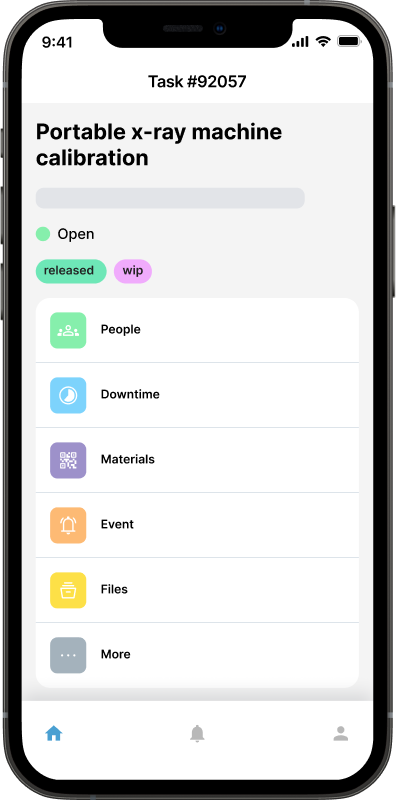
Maintainly was built for maintenance teams that need straightforward automation without an enterprise software learning curve. The Task Templates and Automations feature lets teams configure recurring PMs once (defining the asset, the checklist, the interval, and the assignee) and the system generates work orders automatically from that point forward. There's no separate scheduling module to manage; the PM program runs as part of the normal workflow.
For teams managing assets with variable usage, Maintainly supports meter-based PMs that trigger when equipment reaches a usage threshold rather than a fixed date. Due dates are supported across all work order types (including reactive requests and meter-based PMs) so nothing falls through the cracks regardless of how the task was created.
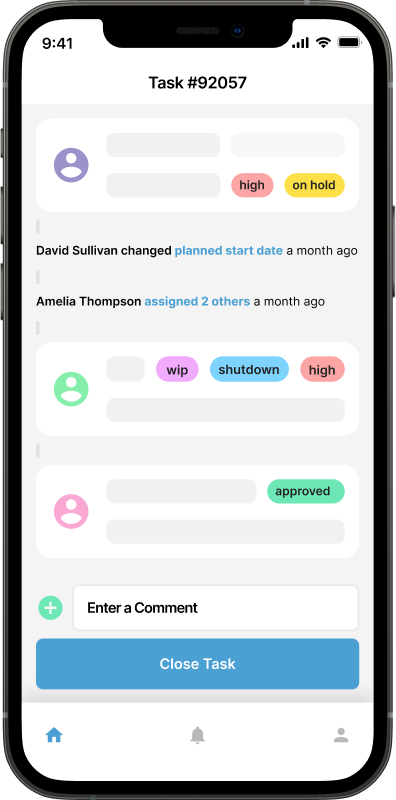
The mobile-first design means technicians can view assigned work orders, complete checklists, and mark tasks done from their phones on the floor, which closes the loop between automation and actual execution. Work order management in manufacturing particularly benefits from this approach, where technicians move between equipment on a busy floor and need work order details available wherever they are.
Getting Started with Maintenance Automation
The right place to start is with your highest-risk assets: the equipment where a missed PM causes the most disruption or the most expensive failure. Configure time-based or meter-based triggers for those assets first, attach the relevant checklists, and run the automated program for a full maintenance cycle before expanding to the broader asset list.
Automation isn't about removing technicians from the process: it's about removing the administrative burden of tracking what's due and creating tasks manually. People still do the work. The system makes sure the right work gets created, assigned, and completed on time.
Teams that implement this consistently find that PM compliance improves, reactive maintenance decreases, and managers spend less time chasing overdue tasks and more time on maintenance strategy itself. That's the practical payoff of well-implemented work order software: not more complexity, but less noise.
Further Reading

Add Due Dates to Any Work Order in Maintainly – Including Reactive and Meter-Based PMs
You can now add a due date to any work order, including reactive jobs, meter-based preventive maintenance (PM) tasks, and any non-time-based PM work orders.
Read more →
How can preventive maintenance software help large vehicle fleets?
The modern economy consists of millions of companies of all sizes. For many of these firms, operating a large vehicle fleet is a key part of how they get day-to-day tasks done. This often requires fleets of cars, vans, trucks, service equipment and heavy machinery.
Read more →