Commusoft vs Maintainly: Inventory, Asset, Scheduling & Work Order Management
 By Eve

When searching for a platform that handles inventory, asset tracking, scheduling, and work order management together, most teams are looking at the core capabilities of a CMMS: a Computerized Maintenance Management System. Commusoft is one platform that comes up in this search, but it was built primarily for field service businesses: companies that dispatch technicians to customer sites. If your team manages maintenance on your own facilities and equipment, a dedicated CMMS like Maintainly is likely a better fit.
Why These Four Capabilities Need to Work Together
Inventory, assets, scheduling, and work orders are not separate problems: they are four parts of the same maintenance operation. A work order needs to reference an asset, draw parts from inventory, and be scheduled according to a maintenance plan. When these systems live in different tools or spreadsheets, maintenance teams spend more time on coordination than on actual maintenance.
A CMMS connects these four areas in a single workflow. The result is less manual coordination, fewer tasks falling through the cracks, and better data for decisions about equipment repair and replacement. When a pump fails at 2am, you need to raise a work order, know exactly which spare parts are in stock, and have the asset history available so your technician knows what has failed before, all from the same system.
Commusoft: Built for Field Service
Commusoft is a well-regarded platform in the field service industry. It is designed for businesses like HVAC contractors, plumbers, and electricians that manage customer relationships, job quoting, and dispatch technicians to client sites. The platform does include work orders, scheduling, and asset history, but these features are built around the customer-facing service model.
Scheduling in Commusoft revolves around dispatching field crews to customer locations. Asset records track equipment at client sites. Inventory is managed in the context of job costing and billing for customer work. The system is optimized for running a service business, not for running an internal maintenance department.
If your team operates within your own facility (managing the maintenance of equipment you own and operate) this structure may not match how you work. You are not billing customers for service calls. You are keeping your own equipment running and tracking maintenance costs internally. That is a different workflow with different priorities, and it calls for a different kind of software.
 How Maintainly Handles Each Capability
Work Order Management
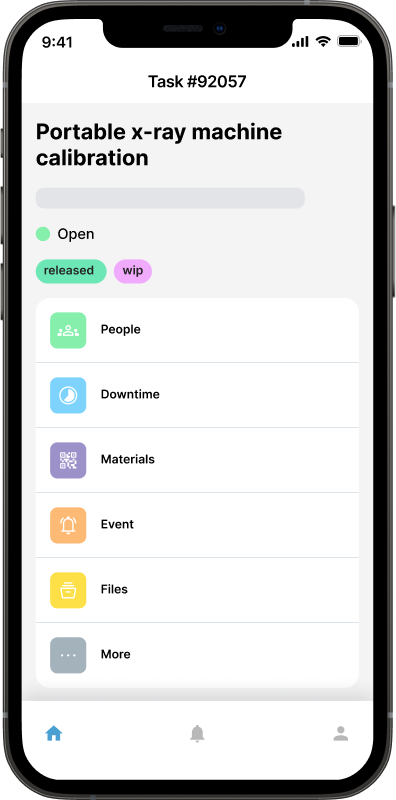
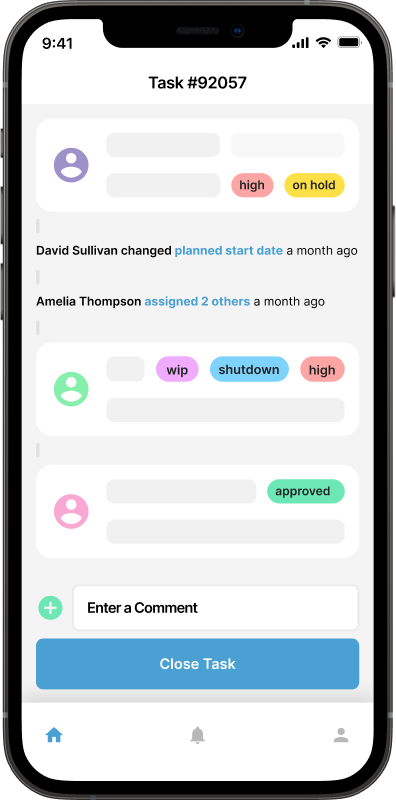
Maintainly's work order system is built around the maintenance workflow. Technicians can submit maintenance requests from any device, including via QR codes mounted on equipment. Managers triage, assign, and track work orders through to completion. Each work order ties directly to an asset record, carries due dates and checklists, and logs parts used, giving you a complete record of every maintenance event on every asset.
Work order software bridges the gap between asset tracking and active maintenance, and Maintainly keeps that connection intact so nothing gets lost between the request and the completed repair.
Asset Tracking
Every asset in Maintainly gets its own record: manufacturer, model, serial number, location, and a running maintenance history. Assets can be organized into a hierarchy (facility, floor, equipment room, individual unit) making it easy to navigate complex environments with hundreds of assets across multiple locations.
QR codes can be printed and attached to physical equipment. Technicians scan them to pull up the asset record instantly and log work on the spot, without paper logs to transcribe later or calls back to the office. The full service history (every work order, every part replaced, every failure) stays attached to the asset record permanently.
Maintenance Scheduling
Preventive maintenance schedules in Maintainly run automatically. You configure recurring tasks, time-based (every 90 days, quarterly, annually) or meter-based (every 500 operating hours), and the system generates work orders automatically when they come due. Maintenance managers do not need to track due dates manually or maintain a separate scheduling calendar.
The schedule runs in the background. The maintenance team works from a queue of auto-generated tasks, with enough lead time to plan labor and order parts before work is due, not after something breaks. This is the fundamental shift from reactive to preventive maintenance, and it is built into the scheduling system by design.
Inventory and Parts Management
Parts and consumables are tracked by location and quantity in Maintainly's inventory module. When technicians use parts on a work order, they log the usage and stock levels adjust in real time. Minimum quantity thresholds trigger alerts before critical parts run out, so you are not discovering a stockout in the middle of an emergency repair.
Parts usage ties back to asset records, so over time you can see exactly how much you have spent maintaining a particular piece of equipment. That data becomes valuable when making repair-vs-replace decisions or planning annual maintenance budgets. A compressor that has consumed significant parts spend in the past year tells a different story than one with a clean history.
Simplicity Without Compromise
One of the most consistent complaints about enterprise maintenance platforms (and field service tools used in a facilities context) is that they require significant setup, training, and ongoing administration. Teams can end up spending more time managing the software than managing their equipment.
A web-based CMMS platform makes work order management accessible without heavy IT overhead. Maintainly is designed to be operational within hours, not weeks. The interface is clean, the learning curve is short, and the pricing is structured so small and mid-sized teams are not paying for modules they do not use.
This matters especially for maintenance teams that do not have a dedicated IT department or a budget for lengthy software implementations. The goal is software that gets out of the way and lets your team focus on keeping equipment running.
Who Should Consider Maintainly
Maintainly is a strong fit if your team:
Manages maintenance on assets your organization owns, not customer-owned equipment at external sites
Needs preventive maintenance scheduling tied directly to asset records
Wants inventory tracking connected to work orders and asset history in one system
Has a small to mid-sized team that does not need customer quoting, invoicing, or billing workflows
Wants a system that is up and running quickly without a lengthy implementation project
Commusoft makes more sense if your primary need is managing field service jobs for paying customers: dispatching crews, generating quotes, and invoicing for billable work. That is a different category of software with different strengths, and the right choice depends on which problem you are actually trying to solve.
Evaluating Any Platform on These Four Capabilities
Whether you are comparing Maintainly, Commusoft, or any other platform, inventory, assets, scheduling, and work orders are the right lens for evaluation. Ask each vendor these questions:
Do work orders link directly to asset records, or are they managed separately?
Does parts usage on a work order automatically update stock levels in inventory?
Can preventive maintenance schedules generate work orders automatically, or does someone create them manually each time?
Can you see the complete maintenance history of any asset, including every work order, part used, and labor hour?
How long does it realistically take to get from sign-up to your first work order in the system?
CMMS software transforms work order management when all four capabilities are genuinely connected, not bolted together from separate modules. Maintainly is built with those connections at its core, making it a practical choice for teams that need all four capabilities without the complexity of a full field service platform.
If you are evaluating options, Maintainly offers a free plan for small teams and a straightforward setup process. See how manufacturing and facility teams use work order management to run maintenance efficiently, and decide whether the same approach would work for your operation.
Further Reading

Work Order Management: A Complete Guide
What a work order is, how the lifecycle works, how tracking and automation change a maintenance team, what to look for in work order software, and what changes by industry.
Read more →