Maintainly vs. Limble CMMS - A Detailed Comparison for Maintenance Teams (2026)
 By Eve

Maintainly vs. Limble CMMS — A Detailed Comparison for Maintenance Teams
Maintenance teams today need software that simplifies work orders, streamlines preventive maintenance, tracks assets, and helps reduce downtime, whether you’re a small facility, a growing mid-sized business, or a larger operations team. In this comparison, we’ll break down how Maintainly CMMS and Limble CMMS stack up across key categories so you can determine which platform is the best fit for your organization.
Quick Snapshot: Maintainly CMMS vs Limble CMMS
Feature Category | Maintainly | Limble CMMS |
|---|---|---|
Core Focus | Simple, mobile-first CMMS with fast setup and intuitive use | Comprehensive CMMS with strong asset, inventory, and reporting capabilities |
Preventive Maintenance | Yes — automated based on time or meter readings | Yes — automated scheduling with customizable triggers |
Asset Management | Flexible asset hierarchies, QR code scanning | Centralized asset registry with histories |
Mobile App | Full native mobile support | Full native mobile support |
Inventory Management | Add-on available | Built-in with inventory tracking |
Reporting & Analytics | Standard reports + filters | Advanced dashboards and analytics |
Integrations | API access | Integrations + API |
Pricing | Freemium + paid tiers | Paid tiers starting ~$28/user/mo; free trial available |
Best for | Small teams up to growing mid-size | Mid-market teams needing robust tracking |
What They Are
Maintainly - Simple, Scalable CMMS
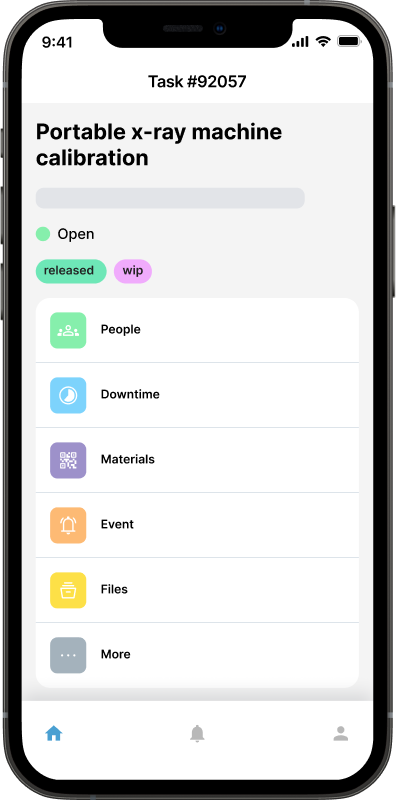
Maintainly is a cloud-based CMMS built around ease of use, fast setup, and mobile maintenance workflows. It lets teams create and manage work orders, schedule preventive and corrective maintenance, scan QR codes for assets, and track parts consumption, all from desktop or mobile. Maintainly’s modular environment allows teams to scale features like inventory and timesheets as needed without paying for unwanted functionality.
Limble CMMS - Feature-Rich Maintenance Platform
Limble CMMS positions itself as a full-featured maintenance management solution trusted by tens of thousands of maintenance professionals. It offers work order management, preventive maintenance, asset tracking, inventory control, analytics dashboards, and integrations with third-party systems. Limble is designed to reduce downtime, give real-time insight into maintenance tasks, and support larger, multi-location operations.
Feature Comparison
1. Work Orders & Maintenance Management
Maintainly
Supports both preventive and reactive work orders.
Automated scheduling based on time/meter triggers.
Easy QR code asset scanning to open or view work orders in the field.
Limble CMMS
Rich work order capabilities with attached procedures, checklists, photos, and file uploads.
Schedules work orders with flexible triggers and recurring tasks.
Strong mobile execution with QR code scanning and offline support.
Verdict: Both platforms deliver strong core maintenance functionality, but they take different approaches. Maintainly emphasizes simplicity and speed, helping teams adopt a CMMS quickly with minimal disruption. Limble provides deeper configuration options and more advanced workflows, making it better suited for highly structured or complex maintenance environments. For organizations seeking a clean, efficient solution without unnecessary complexity, Maintainly offers a clear advantage.
2. Asset & Inventory Management
Maintainly
Flexible asset hierarchies with detailed audit trails.
Inventory available as an add-on with cycle counts, stock transfers, back-orders, etc.
Limble CMMS
Centralized asset registry with complete maintenance histories.
Built-in inventory management across locations, including parts tracking and automated notifications.
Analytics tied to asset and parts usage.
Verdict: Limble CMMS offers a more comprehensive inventory system out of the box, making it a strong choice for teams with complex parts and supply chain requirements. However, Maintainly’s modular approach gives it a key advantage for many organizations: inventory management is available as an optional add-on, allowing teams that don’t need advanced inventory features to avoid paying for functionality they won’t use. This makes Maintainly a more cost-effective and flexible option for smaller teams or operations with simpler inventory needs, while still providing the ability to scale as requirements grow.
3. Mobile Experience
Maintainly
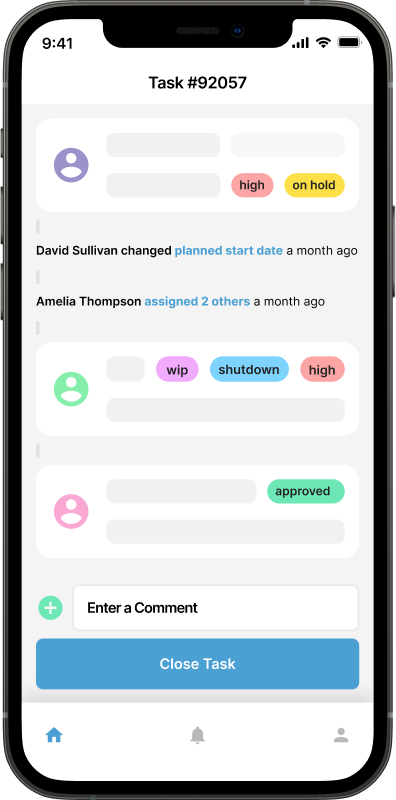
Native iOS and Android apps that let technicians update work orders, scan assets, and upload attachments on the go.
Limble CMMS
Fully functional mobile apps with offline capability.
Field techs can access schedules, close tasks, and view histories without returning to a desktop.
Verdict: Both solutions offer powerful mobile tools for field technicians. Limble’s offline functionality and detailed asset histories may benefit teams operating in low-connectivity or highly asset-intensive environments. Maintainly, however, focuses on a clean, intuitive mobile interface that makes it easy for technicians to complete tasks quickly with minimal training, which can improve adoption and productivity for everyday maintenance work.
4. Reporting & Analytics
Maintainly
Offers standard reports for work orders, asset performance, downtime, parts usage, and technician performance.
Limble CMMS
Stronger dashboards and analytics with KPI tracking and customizable views.
Reports and analytics are deeper and more flexible.
Verdict: Limble is better suited for teams that want advanced reporting and KPI dashboards built into their workflow.
5. Ease of Implementation & Learning Curve
Maintainly
Quick setup, minimal training needed, intuitive interface.
Designed for teams that want to switch from spreadsheets quickly.
Limble CMMS
Also considered easy to use, but can require more initial configuration due to richer feature sets.
Verdict: Maintainly’s simple design and quick setup process make it an excellent choice for teams looking to deploy a CMMS rapidly and start seeing value almost immediately. Limble’s richer feature set can demand more upfront configuration, but it rewards organizations that need advanced functionality and are prepared to invest the time in a more customized implementation.
6. Pricing & Value
Maintainly
Freemium tier available with essential features.
Paid plans add advanced capabilities, modular pricing helps control costs.
Limble CMMS
Paid subscription model with Standard (~$28/user/mo) and Premium+ (~$69/user/mo) tiers. Some pricing may vary or require quoting.
Verdict: Maintainly’s free tier and modular pricing model make it especially attractive for budget-conscious teams that want to pay only for the features they actually need. This approach allows organizations to start small and scale functionality over time without committing to a higher-cost, all-inclusive plan. Limble’s pricing, by contrast, reflects its broader built-in feature set and may be better suited for teams that require advanced inventory management, analytics, and customization from the outset.
Who Should Choose Which?
Choose Maintainly if:
You need a fast, low-overhead solution that gets your team off spreadsheets quickly.
Intuitive mobile use and minimal training time are priorities.
You prefer modular pricing and the ability to scale features incrementally.
Choose Limble CMMS if:
You want deeper inventory management, analytics dashboards, and custom workflows.
You manage assets across multiple sites or require more advanced planning.
Your team benefits from richer reporting and integration capabilities.
Why not do a free trial?
Both Maintainly CMMS and Limble CMMS are strong CMMS platforms that improve maintenance operations, reduce downtime, and help teams work smarter. Maintainly stands out for simplicity, quick onboarding, and cost-effective growth. Limble shines with robust analytics, comprehensive asset and inventory management, and advanced reporting tools. The best choice ultimately depends on your team’s size, complexity of operations, and long-term maintenance goals.