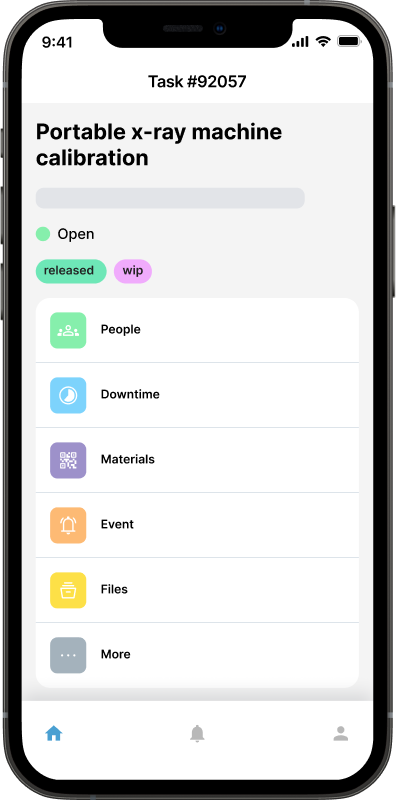
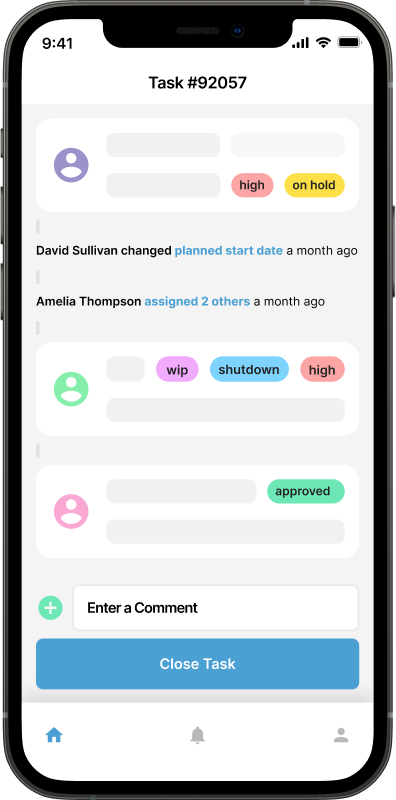
Why CMMS Isn't Just for Big Companies: The SME Case for Maintenance Software
 By Steven Quayle

When people think of Computerized Maintenance Management System (CMMS) software, they often picture sprawling enterprise operations: Fortune 500 manufacturers with hundreds of technicians, massive asset portfolios, and dedicated IT departments. It's a perception that has quietly held back thousands of small and medium-sized enterprises (SMEs) from adopting one of the most practical operational tools available to them.
The reality? CMMS was built to solve maintenance problems, and those problems don't get smaller just because a business does.
Whether you're running a lean maintenance team at a regional food processing plant or managing facilities across a growing hospitality business, the challenges are consistent: work orders pile up, assets fail at the worst possible moment, and staying on top of compliance feels like a constant uphill battle. CMMS addresses all of it. And for SMEs with tighter budgets and fewer staff to absorb inefficiency, the return on investment can be even more pronounced than it is for the enterprise giants already using it.
Here's why CMMS belongs in your operation, regardless of your size.
1. Small Teams Can't Afford Inefficiency: CMMS Fixes That
Ironically, CMMS often delivers its greatest value to smaller teams. A maintenance crew of three managing work orders through spreadsheets and group chats has far less margin for error than an enterprise department with thirty technicians. When one person forgets a task or a work order slips through the cracks, the whole operation feels it.
CMMS centralizes everything (work orders, asset records, maintenance schedules, and team communication) in one place. Routine tasks are automated, priorities are clear, and nothing gets lost. Small teams don't need to work harder; they need to work smarter. CMMS makes that possible.
2. The ROI Makes Sense at Any Budget
There's no getting around the fact that CMMS requires an upfront investment. But the math holds up for SMEs, often compellingly so. The biggest cost drivers in any maintenance operation are unplanned downtime and emergency repairs, both of which CMMS directly reduces through preventive scheduling and early fault detection.
When a critical piece of equipment fails unexpectedly, the cost isn't just the repair bill: it's lost production, overtime, expedited parts, and knock-on disruption across the business. CMMS helps prevent those scenarios. For businesses where a single major breakdown can be genuinely destabilising, that protection has serious financial value. Many platforms now offer free or affordable tiers built specifically for SMEs, making the entry point lower than many assume.
3. It Scales With You
Modern CMMS platforms are built to grow alongside your business. SMEs can start with a basic configuration (managing a handful of assets and a modest work order volume) and expand as operations evolve. New assets, additional sites, more team members: a well-designed CMMS accommodates all of it without requiring a costly overhaul.
The investment you make today continues delivering value as your business changes, rather than becoming redundant the moment you outgrow it.
4. Work Order Management: Where Chaos Becomes Control
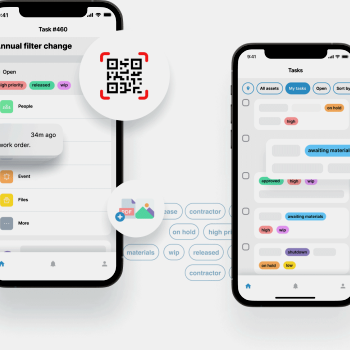
For small maintenance teams, work order management is often where the wheels come off. Verbal requests get forgotten, email chains become impossible to follow, and prioritisation turns reactive rather than strategic. CMMS replaces all of that with a structured, transparent workflow.
Work orders are created, assigned, tracked, and closed within the system. Technicians know exactly what they're responsible for. Managers have real-time visibility into what's in progress, what's overdue, and what's next. The result is a team that operates with clarity and purpose rather than constantly firefighting.
5. Asset Lifecycle Management for the Assets That Matter Most
SMEs may have fewer assets than a large enterprise, but those assets are no less critical to daily operations. A failed packaging line, a broken HVAC system, or a grounded vehicle can bring an SME to a standstill in a way that a larger organisation (with built-in redundancy) can absorb far more easily.
CMMS enables full asset lifecycle management: tracking purchase history, maintenance records, warranty status, and performance data from procurement through to disposal. This approach helps SMEs make smarter repair-versus-replace decisions and ensures high-value assets are always operating at their best.
6. Regulatory Compliance Without the Paperwork Headache
Compliance obligations don't scale down with company size. An SME in food manufacturing, healthcare, or facilities management faces the same regulatory requirements as its larger counterparts, typically with less administrative support to manage them. CMMS automates the documentation side: maintenance logs are recorded automatically, inspection schedules are built in, and compliance reports can be generated on demand.
Less time chasing paperwork. More confidence heading into audits. For industries where non-compliance carries real financial or reputational consequences, this alone can justify the investment.
7. Data-Driven Decisions, Even at Small Scale
CMMS doesn't just track maintenance activity: it generates insights. Over time, the system builds a clear picture of which assets require the most attention, which failure patterns are recurring, and where maintenance spend is concentrated. Even a small team can use this data to adjust preventive maintenance schedules, renegotiate service contracts, or flag assets that are costing more to maintain than they're worth.
For SMEs competing against better-resourced rivals, this kind of operational intelligence is a genuine competitive advantage.
8. Better Communication Across the Whole Team
When everyone works from the same system, communication improves naturally. Technicians can update task statuses in real time, attach photos or notes to work orders, and access documentation from the field. Managers get an accurate picture of operations without chasing updates. And when a new team member joins, the system provides an immediate maintenance history, significantly reducing the knowledge transfer burden.
 9. Preventive Maintenance: The Single Biggest Unlock for SMEs
If there's one CMMS capability that delivers outsized value for SMEs, it's preventive maintenance. Shifting from reactive ("fix it when it breaks") to proactive ("maintain it before it fails") is transformative for businesses where downtime is disproportionately costly.
CMMS automates the scheduling of preventive tasks based on time intervals, usage thresholds, or condition data. Assets stay healthier, lifespans extend, and disruptive failures become less frequent. For a small team already stretched thin, avoiding emergency callouts is both a quality-of-life improvement and a meaningful financial one.
10. Manage Maintenance From Anywhere
Cloud-based CMMS platforms allow managers and technicians to access the system from any device, at any location. For SMEs where team members wear multiple hats or cover operations across more than one site, this flexibility is invaluable. Work orders can be raised and assigned remotely, asset history can be reviewed in the field, and nothing requires being physically at a desktop to stay in control.
Quick Reference: CMMS Benefits for SMEs
Benefit | What It Means in Practice |
|---|---|
Efficient resource utilisation | Automates routine tasks so small teams work smarter, not harder |
Cost-effective ROI | Reduces emergency repairs, downtime, and long-term maintenance spend |
Scalability | Grows with your business without requiring costly system changes |
Work order management | Centralises and structures all maintenance requests and assignments |
Asset lifecycle management | Tracks assets from procurement to disposal, informing repair vs. replace decisions |
Regulatory compliance | Automates record-keeping, inspection scheduling, and compliance reporting |
Data-driven decisions | Surfaces trends and insights that improve operational strategy |
Team communication | Keeps everyone aligned with real-time updates and shared documentation |
Preventive maintenance | Shifts teams from reactive to proactive, reducing costly breakdowns |
Remote accessibility | Enables management and updates from any device, anywhere |
The Bottom Line
CMMS isn't a luxury reserved for large enterprises with deep pockets and dedicated IT departments. It's a practical operations tool that addresses real, daily challenges faced by maintenance teams of every size, and in many cases, it delivers its most meaningful impact precisely where resources are tightest.
For SMEs looking to reduce downtime, control costs, stay compliant, and build a more resilient operation, adopting CMMS isn't a big-company move. It's a smart one.
Maintainly CMMS is ideally suited to SME's. Try it today, free for 14 days.
Further Reading

How to Choose the Right CMMS for Your Business
Efficient maintenance management is crucial to keep operations running smoothly. That's where Computerized Maintenance Management Systems (CMMS) and Work Order Management Software come into play. These digital tools help streamline maintenance tasks, reduce downtime, and ultimately boost productivity.
Read more →
Why Preventative Maintenance Software Is a Game-Changer for Small Businesses
Preventative maintenance software can be one of the smartest investments a small business can make. Rather than adding unnecessary administrative burden, it streamlines operations, saves time, reduces costs, and increases efficiency across the board.
Read more →
Enhancing Facility Management Efficiency Via CMMS
In a world dominated by technology, efficient facility management is crucial for any business with a physical location. Facility managers ensure that the physical building, equipment, systems, and services are functioning properly and operating at optimal capacity.
Read more →
Preventive vs Reactive Maintenance: A Complete Guide
Preventive, corrective, reactive, condition-based and predictive maintenance explained, which assets deserve a schedule, and how a CMMS makes the shift from firefighting to planned work.
Read more →